


By: Sampson W Weah – sampsonwweah7@gmail.com
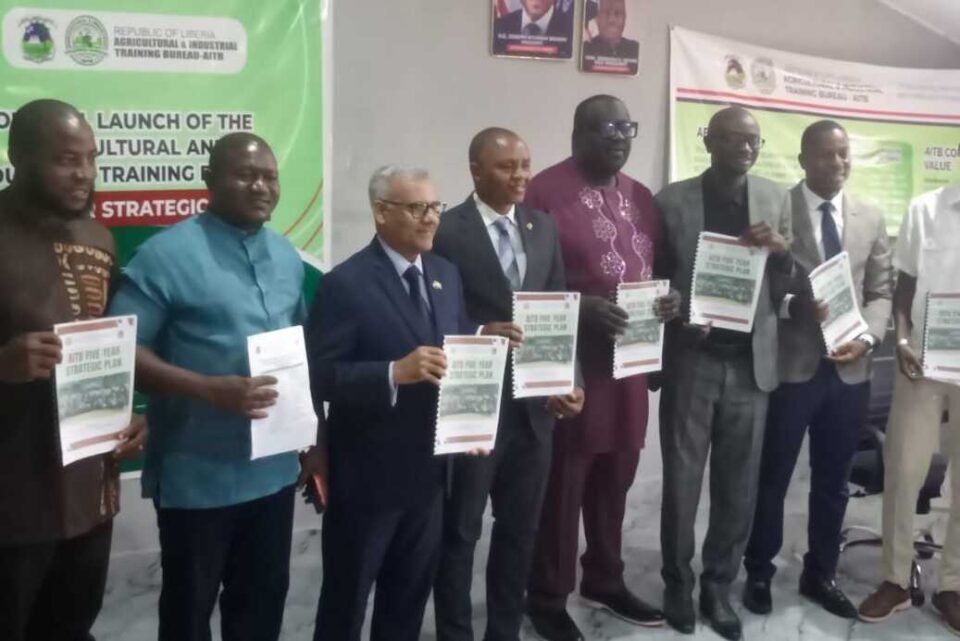
Monrovia – The Agricultural and Industrial Training Bureau (AITB) has launched an ambitious five-year Strategic Plan aimed at reshaping Liberia’s Technical and Vocational Education and Training (TVET) landscape, expanding opportunities for young people, and strengthening the country’s workforce.
The 2025–2029 Strategic Plan was unveiled at a well-attended ceremony that brought together senior government officials, representatives of development partners, civil society actors, TVET administrators, and the media.
Among the distinguished guests were the Chairman and Members of the National Council for TVET and India’s Ambassador to Liberia, H.E. Shri Manoj Bihari Verma.
“A Defining Moment for TVET”
Delivering the keynote address, AITB Director General Abraham Billy described the launch as “a defining moment” in Liberia’s efforts to build a skilled labor force that can drive national growth and economic transformation.
“This Strategic Plan represents our renewed commitment to delivering high-quality training, strengthening institutional systems, and empowering Liberian youth with employable skills,” Billy said. “It signals the beginning of a new era for TVET in our country.”
He extended gratitude to the National Council for TVET for its leadership and coordination, saying its partnership has been central to advancing TVET governance and reforms. Billy also praised the Boakai administration for prioritizing youth empowerment, job creation, and human capital development.
“The President’s vision aligns strongly with our mandate,” he noted. “His unwavering commitment to empowering young people and women inspires the reforms captured in this Strategic Plan.”
Plan Anchored in National and Global Frameworks
The 2025–2029 Strategic Plan is aligned with major national and international development frameworks, including:
- Sustainable Development Goals (SDGs) 4, 5, and 8 – promoting inclusive education, gender equality, and decent work
- African Union Agenda 2063 – focusing on youth empowerment and industrial advancement
- Government of Liberia’s ARREST Agenda (Pillar Six) – prioritizing skills development and job creation
- National TVET Policy – guiding reforms for standardization, certification, and quality training
Billy emphasized that the plan is the product of broad consultations and reflects Liberia’s labor-market realities and economic needs.
Key Priorities of the 2025–2029 Strategic Plan
The Strategic Plan outlines a comprehensive framework aimed at improving TVET governance, service delivery, and impact. The core priorities include:
1. Improving Quality and Accountability
Strengthening quality assurance systems, upgrading assessments, and ensuring that all training programs meet national standards.
2. Enhancing System Coordination
Promoting stronger collaboration among TVET institutions, development partners, and government agencies to reduce fragmentation and boost efficiency.
3. Modernizing Training Facilities
Rehabilitating training centers, upgrading equipment, and integrating technology-driven training techniques.
4. Building Institutional Capacity
Training instructors, improving management structures, and strengthening administrative systems.
5. Strengthening Industry Linkages
Deepening partnerships with private sector industries to ensure training programs reflect labor-market needs and to enhance job placement opportunities.
Ensuring Inclusion for Women, Youth, and Persons With Disabilities
Billy highlighted that inclusiveness is central to the Strategic Plan. AITB intends to expand training opportunities for women and girls—who remain underrepresented in several technical fields—while strengthening support for youth and persons with disabilities.
“No Liberian should be denied the opportunity to learn a skill,” he stressed. “Our programs must reflect the diversity of the population we serve.”
Partnerships and Accountability
The Director General reaffirmed AITB’s strong working relationship with the National Council for TVET, citing ongoing efforts to strengthen certification, improve workforce competitiveness, and mobilize resources for institutional renewal.
He noted that successful implementation of the plan will depend on strong partnerships across government, the private sector, and development partners.
“TVET development requires shared responsibility,” he said. “Only through collective effort can we transform this vision into lasting impact.”
Billy concluded by emphasizing the Bureau’s commitment to transparency, accountability, and measurable results.
“This Plan is more than a blueprint—it is our promise to the Liberian people,” he said. “A promise to deliver skills that transform lives, strengthen families, and support national development.”
The launch of the AITB 2025–2029 Strategic Plan signals a renewed national push to position Liberia’s TVET sector as a key driver of employment, productivity, and economic prosperity.
