


By: Trokon Wrepue – trokon1992seokin@gmail.com
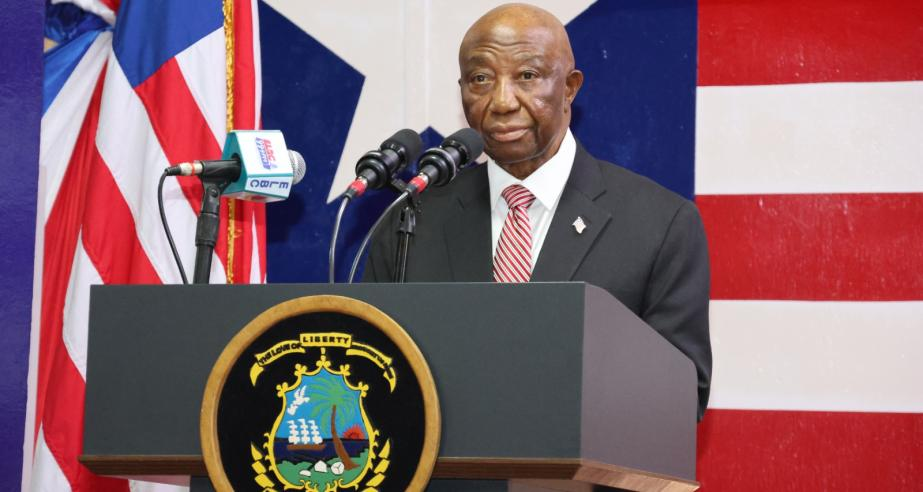
MONROVIA — In a landmark policy shift aimed at revitalizing Liberia’s rubber industry and accelerating economic growth, President Joseph Nyuma Boakai, has signed Executive Order No. 151, placing a ban on the export of unprocessed rubber and introducing a comprehensive framework to encourage domestic processing and value addition.
Announced from the Executive Mansion, the order takes immediate effect and is seen as a critical step in President Boakai’s broader agenda to industrialize Liberia’s economy and create meaningful employment opportunities.
“For too long, Liberia has exported its rubber in raw form, forfeiting opportunities for domestic manufacturing, job creation, and increased revenue,” President Boakai said during the announcement. “This Executive Order is a turning point. We are laying the groundwork for industrialization, value addition, and long-term economic transformation.”
Under the new directive, the export of raw rubber materials—such as natural latex, cup lump, bark scrap, and ground scrap—is now prohibited. Only rubber that has undergone processing, particularly forms like Technically Specified Rubber (TSR), will be permitted for export.
In addition to export restrictions, the order imposes new fiscal measures. Exporters must now fulfill financial obligations including a presumptive tax, contributions to the Rubber Development Fund Incorporated (RDFI), and a surcharge of $150 per metric ton of rubber exported.
To qualify for an export permit, companies must provide official receipts for taxes and fees, secure a valid tax clearance, and obtain approvals from both the Ministry of Agriculture and the Ministry of Commerce and Industry. Once these requirements are met, an Export Permit Declaration (EPD) will be issued.
The order also mandates that exporters remit an advance income tax immediately after export. The rate is 4% for small-scale exporters and 2% for medium and large-scale operations.
Noncompliance will carry heavy consequences. Companies found falsifying documents or attempting to evade the order’s provisions will be fined $50,000 for the first offense. Repeat violations could result in further penalties, including the loss of export privileges.
Enforcement of the Executive Order will be spearheaded by the Ministry of Agriculture in collaboration with the Ministry of Finance and Development Planning, the Ministry of Commerce and Industry, the Liberia Revenue Authority, and the Rubber Development Fund Incorporated.
These institutions are expected to issue joint administrative guidelines to facilitate smooth and coordinated implementation.
The move has been widely viewed as part of President Boakai’s broader economic reform strategy to reduce Liberia’s reliance on raw material exports, stimulate local industry, and generate long-term, sustainable economic benefits.
By shifting the country toward processing its own natural resources, the government hopes to boost export value, support smallholder rubber farmers, and increase employment in rural and urban communities alike.
“This is about more than rubber—it’s about Liberia owning the value of its resources and creating a future where our people benefit directly from the wealth beneath their feet,” the President emphasized.
The Executive Order marks one of the administration’s most assertive economic policy actions to date and is expected to trigger both domestic and international interest in Liberia’s industrial potential.
