


NATIONAL NEWS
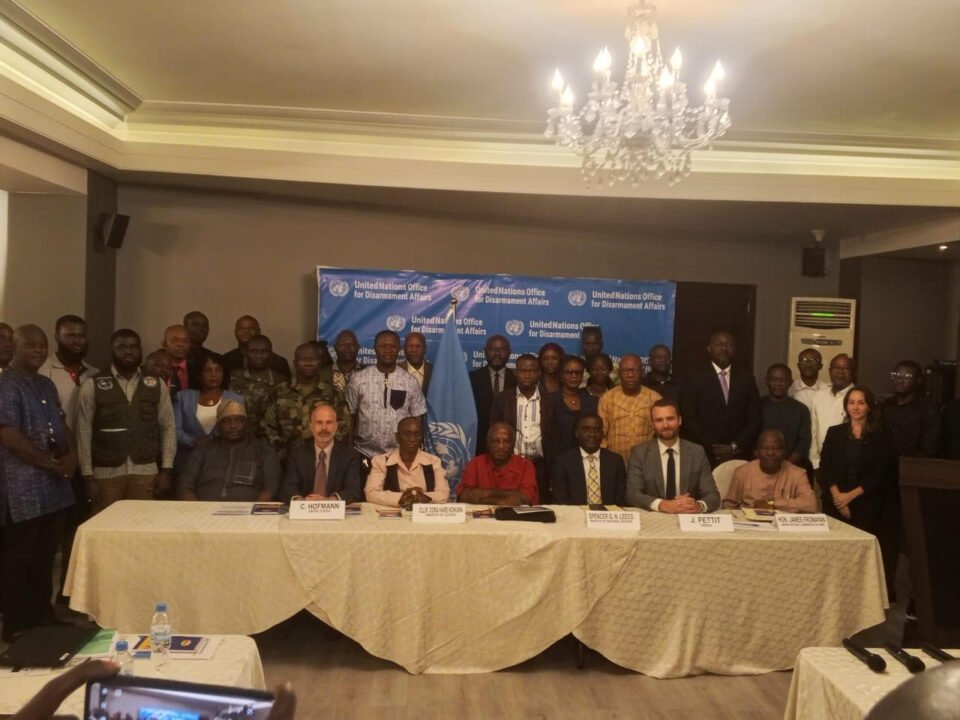
MONROVIA – The Government of Liberia, through the Arms Commission, in collaboration with the United Nations Office for Disarmament Affairs (UNODA), is hosting a two-day stakeholders’ workshop on the implementation of the Biological Weapons Convention (BWC).
The workshop, which brings together thirty-five participants from various government ministries, agencies, and commissions, aims to strengthen Liberia’s national capacity to implement the BWC and enhance inter-agency coordination and cooperation.
By: Kabina S. Kaba – kabinaskabah98@gmail.com
Addressing the opening session, Deputy Minister for Administration and Public Safety and Acting Minister of Justice, Cllr. Cora Hare-Konuwa, welcomed participants and reaffirmed Liberia’s commitment to the global prohibition of biological weapons.
“Liberia’s ratification of the Biological Weapons Convention in 2016 was a moral declaration that we stand firmly against the misuse of science and technology for destructive purposes,” she said.
Cllr. Hare-Konuwa emphasized that the workshop forms part of a broader national effort to strengthen legislative and regulatory frameworks against biological weapons, build institutional capacity for detection, prevention, and response, and promote stakeholder awareness.
“This is not only about compliance with international law; it is about protecting the lives of our citizens, safeguarding public health, and ensuring national resilience,” she added.
The Chairman of the Liberia National Commission on Arms (LINCA), James M. Fromoyan, also welcomed participants and underscored the importance of the BWC in preventing the proliferation and misuse of biological agents.
“The Convention provides a critical framework not only to prohibit these weapons, but also to promote transparency, peaceful scientific advancement, and mutual trust among nations,” he said.
Mr. Fromoyan stressed that effective implementation of the Convention requires a whole-of-government and whole-of-society approach, grounded in trust, collaboration, and sustained engagement.
“Through such collaboration, Liberia will be better positioned to implement the Convention effectively, submit regular confidence-building measures, and respond proactively to biological threats,” he added.
Also speaking, Deputy Defense Minister for Operations, Spencer G.N. Leeco, representing the Ministry of National Defense, commended the organizers and reaffirmed Liberia’s commitment to global peace, national security, and the protection of human life.
“The threats posed by biological weapons—whether deliberate, accidental, or emerging—are real and evolving,” he said.
“Strengthening our national systems to prevent misuse, enhance preparedness, and ensure rapid response is not optional; it is a responsibility we owe to our citizens and the international community.”
The United States, the United Kingdom, and Canada are supporting the workshop, which is expected to contribute to Liberia’s efforts to strengthen its national systems for early warning, health risk management, and resilience against biological threats.
Participants call for collective action
Participants at the workshop have been urged to approach discussions with a spirit of shared responsibility and forward-thinking.
“Let us view this exercise not merely as a compliance effort, but as an opportunity to advance national security, build scientific and technical capacity, and safeguard the health and well-being of all Liberians,” a representative of LINCA said.
The workshop is expected to conclude on April 29, 2026, with a communiqué outlining Liberia’s next steps in implementing the BWC and strengthening national systems to prevent the misuse of biological agents.
Background
The Biological Weapons Convention (BWC) is a cornerstone of the international disarmament framework, reflecting the global commitment to prohibit the development, production, acquisition, transfer, stockpiling, and use of biological and toxin weapons.
Liberia ratified the Convention in 2016, reaffirming its commitment to global security and non-proliferation efforts.
The United Nations Office for Disarmament Affairs (UNODA) is supporting the workshop as part of its mandate to assist States Parties in implementing the BWC and promoting international cooperation in the life sciences.
