


NATIONAL NEWS
MONROVIA – The Monetary Policy Committee (MPC) of the Central Bank of Liberia has maintained a cautious tightening stance following its April 27, 2026 meeting, citing rising global risks, emerging domestic price pressures, and the need to preserve macroeconomic stability.
By: Trokon S. Wrepue – trokon1992seokin@gmail.com
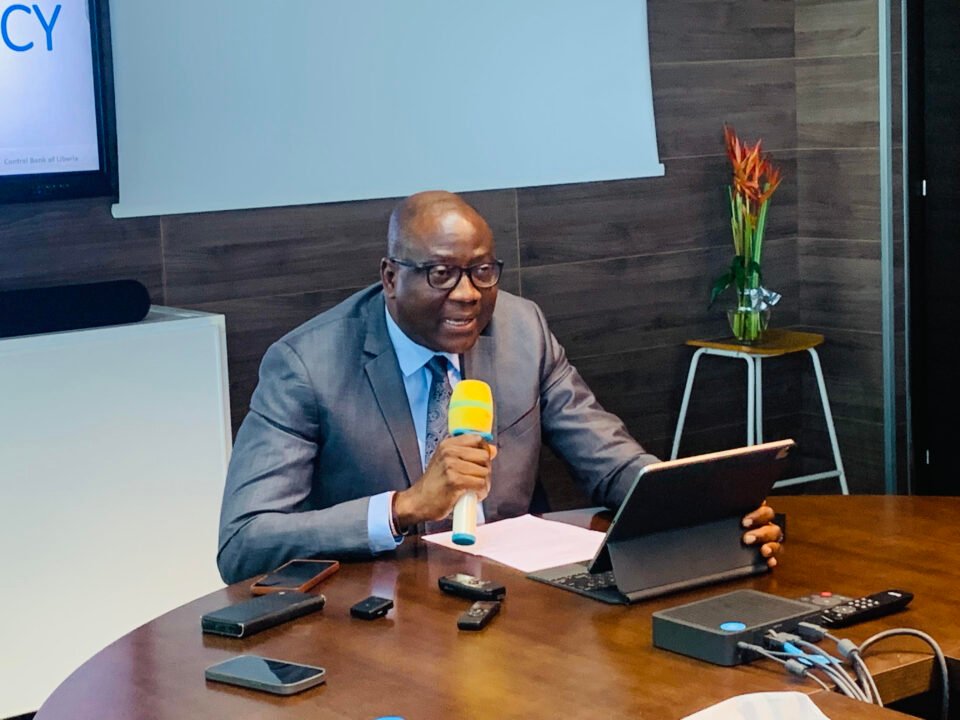
The decision, announced by Executive Governor Henry Saamoi, follows a comprehensive review of global and domestic economic conditions during the first quarter of 2026.
The Committee emphasized that its policy direction remains focused on price stability, exchange rate stability, financial system resilience, and sustainable economic growth.
Global Economic Pressures Intensify
The MPC noted that the global economy continues to slow amid heightened geopolitical tensions, trade uncertainties, and disruptions in energy markets.
The International Monetary Fund has revised its 2026 global growth projection downward, largely due to an oil price shock linked to ongoing conflict in the Middle East.
Although global inflation had been on a downward path, recent spikes in oil and commodity prices have renewed concerns. Inflation is now projected to rise to about 4.4 percent before easing in 2027.
At the same time, tightening global financial conditions—marked by rising bond yields, widening credit spreads, and strong demand for the U.S. dollar—are increasing borrowing costs for emerging economies, including Liberia.
Domestic Economy Shows Resilience
Despite external challenges, Liberia’s economy remained resilient, with growth projected at 5.1 percent in 2026. Economic activity in the first quarter was driven by mining, agriculture, manufacturing, and services.
The Committee, however, stressed that sustaining this growth will require continued fiscal reforms, improved domestic revenue mobilization, and ongoing efforts to strengthen the banking sector.
Inflation moderated to 3.6 percent in the first quarter, down from 4.4 percent in the previous quarter, staying within the Central Bank’s single-digit target.
The decline was largely due to lower food and market prices, although transportation costs increased slightly.
Inflation is expected to rise modestly to around 5.3 percent in the second quarter, influenced by higher imported fuel and food prices as well as exchange rate pressures.
Banking Sector Stable but Vulnerabilities Remain
The MPC reported that Liberia’s banking sector remains stable, well-capitalized, and liquid, with key indicators exceeding regulatory requirements.
However, non-performing loans remain elevated above the regulatory threshold, posing a significant financial stability risk—especially those denominated in U.S. dollars.
According to the MPC, Credit growth remained modest, with lending concentrated in trade, personal, and services sectors, while key sectors like agriculture and construction continue to receive limited financing.
External Sector and Exchange Rate Pressures
On the external front, export earnings increased, driven by gold, iron ore, and timber exports. However, rising imports narrowed the trade balance.
Gross international reserves rose to approximately US$722.5 million, equivalent to about 2.9 months of import cover—slightly below the standard three-month benchmark.
Meanwhile, the Liberian dollar depreciated by about 2.9 percent during the quarter, highlighting ongoing external vulnerabilities.
Policy Stance Remains Unchanged
In response to these developments, the MPC maintained the Monetary Policy Rate at 16.25 percent.
Reserve requirements were also left unchanged at 25 percent for Liberian dollar deposits and 10 percent for U.S. dollar deposits, while the interest rate corridor around the policy rate was maintained.
The Committee reaffirmed its commitment to using monetary policy tools, including CBL bills and standing facilities, to manage liquidity and ensure effective transmission across the financial system.
Outlook Remains Cautiously Optimistic
The MPC indicated that risks to the outlook are tilted toward higher inflation and slower growth. Key concerns include rising global commodity prices, tighter financial conditions, exchange rate pressures, high dollarization, elevated non-performing loans, and potential fiscal challenges.
Despite these risks, the Committee expressed cautious optimism about the near-term outlook while emphasizing the need for vigilance and proactive policy responses.
Governor Saamoi reaffirmed the Central Bank’s commitment to its mandate, stating that maintaining stability is essential for long-term economic growth.
“Stability today is the foundation for growth tomorrow,” he said, underscoring the Bank’s readiness to act decisively to safeguard price and financial stability in Liberia.
