


NATIONAL NEWS
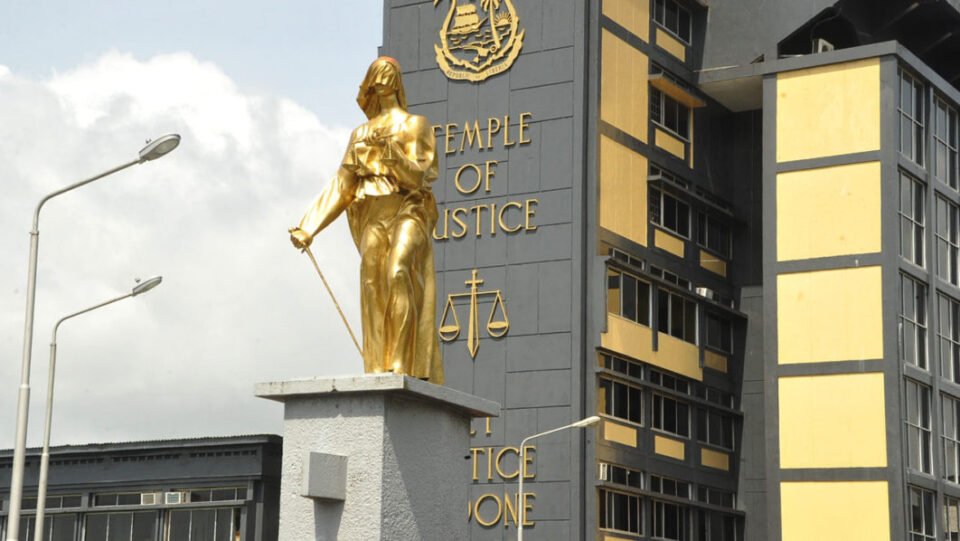
TEMPLE OF JUSTICE – The US$6.2 million economic sabotage trial involving former Finance Minister Samuel Tweah and several co-defendants has reached a critical stage, with both the prosecution and defense closing their cases after weeks of testimony and the submission of documentary evidence.
By: Trokon S. Wrepue – trokon1992seokin@gmail.com
The case, being heard at Criminal Court ‘C’, is presided over by Judge Osuman Feika, who is expected to hear final arguments this Friday before turning the matter over to the jury for deliberation.
The trial has drawn widespread public attention, centering on allegations that large sums of public funds were improperly handled and diverted.
As part of the prosecution’s final push, Liberia Anti-Corruption Commission (LACC) lead investigator Baba Mohammed Boika took the stand as a rebuttal witness, strongly rejecting suggestions that the case is built on speculation.
He told the court that investigators uncovered significant financial movements, including more than L$1 billion and US$500,000 transferred to the Financial Intelligence Agency in September 2023 without legislative approval.
According to Boika, there is no clear evidence demonstrating that these funds were used for national security purposes, as claimed by the defense.
The defense, however, has consistently argued that all financial transactions in question were carried out within the framework of National Security Council procedures and are therefore protected under confidentiality rules governing national security operations.
Taking the stand for the defense, former Acting Justice Minister Cllr. Nyanti Tuan firmly denied all charges against himself and his co-defendants.
He argued that the prosecution has failed to establish the most fundamental element of the case proof that any theft actually occurred.
Tuan questioned the very basis of the allegations, asking who specifically is said to have provided or lost the funds in question.
He also dismissed the money laundering charge, maintaining that such an accusation cannot stand without first proving that a theft or underlying crime took place.
In his testimony, Tuan challenged claims made by co-defendant Jefferson Karmoh, who had indicated that he only became aware of the funds through a copied letter.
Tuan rejected this account, suggesting that Karmoh had prior knowledge of the situation but failed to act or respond accordingly at the time.
Additionally, Tuan criticized the investigative process, arguing that it was incomplete and lacked depth.
He pointed specifically to the failure of investigators to examine asset records that could have provided greater clarity on the movement and use of the funds.
Throughout his testimony, he maintained that all actions he took were within the scope of his official duties as a government official.
With both sides now resting their cases, the trial moves into its final phase. Closing arguments are expected to crystallize the sharply contrasting narratives presented in court—one alleging improper handling of public funds, and the other defending the actions as lawful and consistent with national security protocols.
Ultimately, the fate of the defendants will rest in the hands of the jury, whose interpretation of the evidence and testimony will determine the outcome of one of Liberia’s most closely watched corruption trial in recent years.
