


NATIONAL NEWS
MONROVIA – The Chairperson of the Liberia Anti-Corruption Commission (LACC), Cllr. Alexandra Zoe, is calling for urgent legislative reforms to protect those who report government misconduct.
Speaking at a high-level technical review meeting, Zoe emphasized that the backbone of accountability depends on the state’s ability to guarantee the safety and dignity of whistleblowers.
By: Trokon S. Wrepue – trokon1992seokin@gmail.com
“The fright against corruption is not sustained by institutions alone. It depends on the courage of individuals who choose to speak up, who choose to report wrongdoing and in many instances testify against powerful interests. These individual witnesses and whistleblowers represent the backbone of accountability systems,” Cllr. Zoe said.
Cllr. Zoe reflected that the willingness of witnesses and whistleblowers to come forward is often shaped by one critical consideration which is whether the statement will guarantee their safety, dignity and protection for retaliation.
“Liberia has made tremendous progress with the enactment of the Witness Protection Act and the Whistleblower Act of 2021. These legal instruments were important milestone signaling our collective commitment to transparency, integrity and the rule of law. However, as with any evolving legal framework, practical implementation has revealed gaps, challenges and opportunity for refinement,” She noted.
The Liberia Anti-Corruption Commission Chairperson said effective enforcement of anti-corruption law is closely tie to the level of trust that potential witnesses and whistleblowers have in the LACC’s protection system.
“Where protection mechanisms are seen as weak, uncertain or inaccessible, individuals are understandably reluctant to come forward. This does not only undermine investigation but also weaken the border fight against corruption,” Cllr. Zoe mentioned.
While Liberia enacted protection acts in 2021, the LACC head noted that practical implementation has since revealed significant gaps and institutional challenges.
She argued that potential witnesses remain reluctant to come forward because existing protection mechanisms are often perceived as weak or inaccessible.
To address this, the proposed amendments seek to strengthen institutional coordination, ensure operational independence, and enhance confidentiality safeguards.
However, Cllr. Zoe warned that the quality of these reforms will determine whether the truth is spoken freely or suppressed by the fear of retaliation.
For his part, Deputy Justice Minister for Codification Cllr. Augustine Toe has called for stronger legal protections for whistleblowers, warning that financial incentives alone will not ensure their safety.
Speaking at a technical review meeting, Toe said the government’s plan to amend the Whistleblower Act must be matched by reforms to the Witness Protection framework.
“Motivational incentives are insufficient to genuinely protect whistleblowers without addressing key areas including punishment for retaliation actions, punishment for concealment and suppression of whistleblowers,” He said.
He stressed that without strict penalties for retaliation, suppression of information, and exposure of identities, whistleblowers remain vulnerable to threats and harm.
The Justice Ministry is proposing to expand the mandate of the Witness Protection Agency to cover whistleblowers and lead national protection efforts. The review process also involves key institutions, including the Liberia Anti-Corruption Commission and the judiciary, as part of a broader push to strengthen accountability.
Toe said the reforms aim to align Liberia with international standards while boosting public confidence in the fight against corruption.
Also speaking at the event was Deputy Minister for Budget and Development Planning at the Ministry of Finance and Development Planning, Tanneh G. Brunson, who called for stronger witness and whistleblower protection to boost Liberia’s anti-corruption efforts.
Minister Brunson said gaps in enforcement, coordination, and incentives continue to weaken the impact of existing laws.
The review, led by the Ministry of Justice in collaboration with the Liberia Anti-Corruption Commission and the Witness Protection Agency, aims to address these challenges.
Key issues identified include legislative ambiguities, weak confidentiality measures, limited incentives for whistleblowers, and poor inter-agency coordination.
Brunson emphasized that reforms must be fiscally sustainable, integrated into national budget frameworks, and supported by clear implementation and monitoring systems.
She added that a stronger, well-funded protection framework will enhance public trust, improve accountability, and support Liberia’s broader development goals.
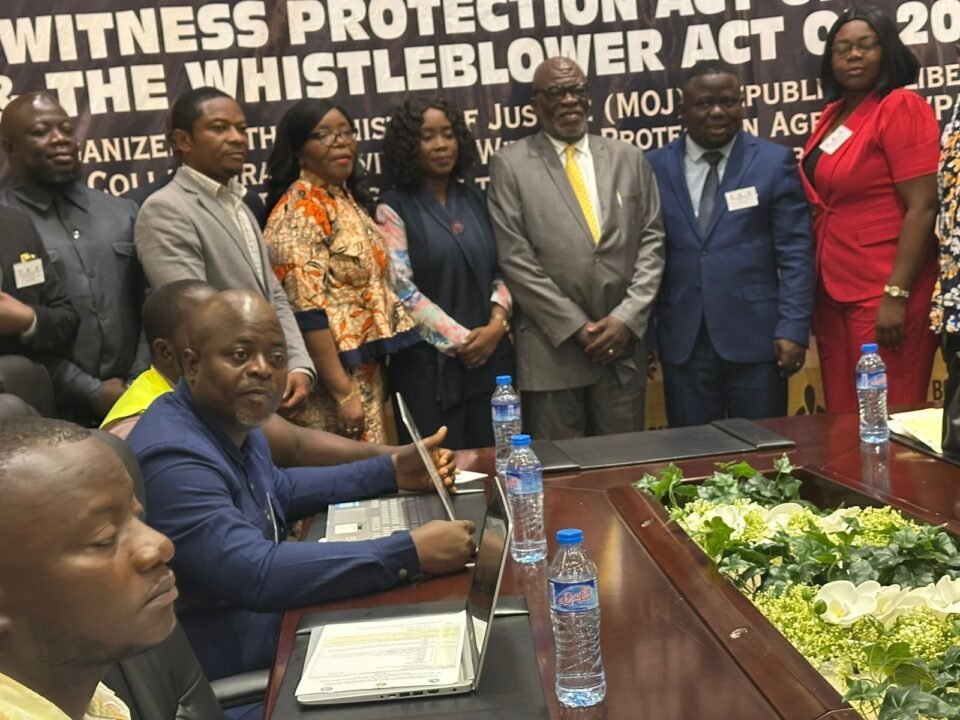
The One-Day High -Level Technical Review Meeting was convened by the Ministry of Justice in Monrovia. The meeting intended is to review the proposed amendments to the Witness Protection and Whistleblower Act of 2021.
The meeting organized under the theme” Strengthening legal frameworks by increasing motivational incentives (rewards and bounties) for effective Witness Protection and Whistleblower safeguard in combating high profile corruption cases and other crimes” brought together several government agencies, development partners, Civil Society Organization, anti-graft institutions and diplomatic mission.
