


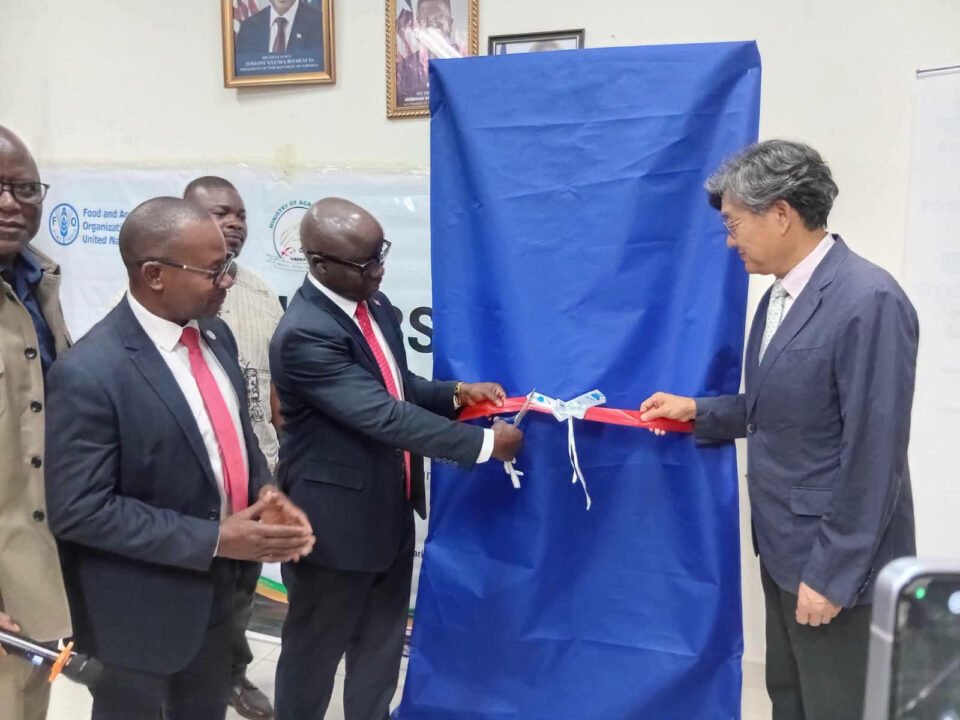
MONROVIA – Agriculture Minister Dr. J. Alexander Nuetah has launched a US$1 million pilot project aimed at helping 150 young people in Bong County build careers and businesses in agriculture.
By: Gegee Brima – alhajigegeebrima@gmail.com
The Green Jobs for Youth in Resilient Agrifood Systems project follows a grant agreement signed on August 11, 2026, by Liberia’s Ministry of Agriculture and the Korea International Cooperation Agency (KOICA).
The Ministry and the Food and Agriculture Organization of the United Nations (FAO) will implement the pilot, which focuses on opportunities in the rice and cassava value chains.
The project is part of an approximately US$13 million regional initiative running from 2026 to 2030 in Liberia, Sierra Leone and Nigeria.
“If we target the youth, we are targeting the future of this country,” Nuetah said at the launch.
He urged young people to help shape the pilot and called on partners to address barriers that could prevent participants from turning their training into livelihoods, particularly a lack of start-up capital.
Nuetah identified opportunities in agricultural production, produce aggregation and farm-input distribution. Referring to young people who might collect produce from farmers for sale, he asked, “What opportunities can be provided there beyond training?”
He urged partners to identify the resources participants would need to establish and grow businesses. He also thanked the Republic of Korea for its support and called for the project to be implemented promptly.
KOICA Country Director for Liberia Kim Eunsub reaffirmed the agency’s commitment to working with the Government of Liberia and FAO.
He said Liberia was the first of the three participating countries to sign the Record of Discussions and urged the Project Steering Committee to clarify responsibilities and strengthen coordination and monitoring.
“While each country has its own priorities and context, we share a common goal to ensure that the youth can see agriculture and agri-business as viable pathways to decent work, innovation and economic growth,” Kim said.
FAO representative Saeed Abubakar Bansi stressed that young women should be central to the initiative and have equitable access to skills, finance, technology and markets.
He said FAO was ready to contribute technical expertise in climate-smart agriculture, rural employment and agribusiness development.
“Let us ensure that when we look back on this initiative in the years ahead, we speak not simply about activities completed or people trained, but about green jobs created, businesses established, incomes improved and communities transformed,” Bansi said.
The Bong County pilot is intended to help the Ministry assess whether and how the program could be expanded.
Any decision to scale it up will depend on where young people can earn reliable incomes across the agricultural value chain and what support they need to put their training into practice.
