


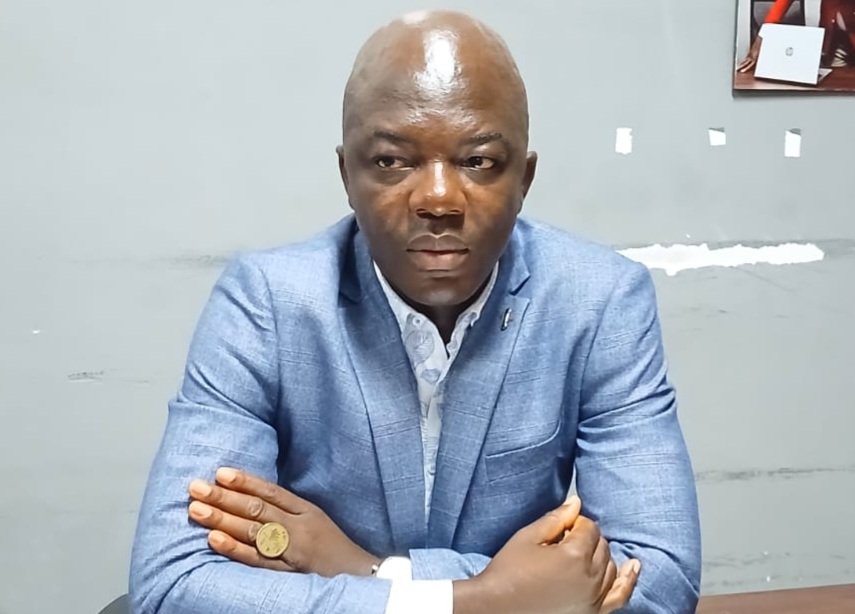
MONROVIA – Deputy Labor Inspector General Darius K. Weamie has strongly denied allegations published by two media institutions accusing him of selling work permits, engaging in alleged revenue losses to the government, and living a luxurious lifestyle from proceeds of the purported scheme.
By: Trokon S. Wrepue – trokon1992seokin@gmail.com
Speaking Thursday at the Ministry of Information’s Regular Press Briefing, Weamie described the reports as “false, misleading, and diabolical,” insisting that he has never sold work permits or been involved in any criminal activity.
He said he has worked with the Ministry of Labor since 2019 and maintained that his previous service as County Information Officer in Margibi County was not associated with similar allegations.
Weamie said the publications claimed he was under internal investigation over an alleged US$60,000 work-permit transaction. He rejected the claim, insisting that he was not under investigation and continued to perform his official duties.
Challenging the accuracy of the reports, Weamie accused the media institutions of failing to adhere to the basic principles of journalism, particularly the “5 Ws and 1 H”—who, what, where, when, why, and how.
He questioned who was allegedly involved in the transaction, where the permits were sold, and how such an operation could have taken place without following established procedures.
To support his denial, the Deputy Labor Inspector General outlined the official process for obtaining a work permit, saying the procedure involves several stages and multiple government offices.
According to Weamie, a company or applicant must first submit a formal written request to the Ministry of Labor. The request is received by the Alien Department and forwarded to the Minister’s office for review.
If approved, the Assistant Minister for Alien Affairs prepares the billing, after which the applicant makes payment through the Liberia Revenue Authority (LRA).
He explained that the applicant must then present the LRA flag receipt to the Ministry’s information technology unit, which works in partnership with Secerix. Fingerprints and photographs are collected before the work permit is produced.
Weamie argued that the multi-step process makes it difficult for anyone to independently sell work permits outside the established system. However, the procedures he outlined were presented as part of his defense against the allegations and do not, on their own, establish whether the specific claims have been independently investigated.
Addressing concerns about duplicate or illegally issued permits, Weamie acknowledged that the Ministry has encountered individuals allegedly posing as labor inspectors and misleading businesses. He said such activities have been a concern for the institution.
He also denied claims that the Ministry of Labor has established partnerships with media organizations, including GAR Media and other outlets.
Weamie maintained that the Ministry has only one communications director, Patrick Berry, and rejected suggestions that it was working in partnership with other media entities.
The Deputy Labor Inspector General further accused some media personnel of approaching businesses and requesting labor-related documents while filming, describing the practice as inappropriate and potentially harmful. He argued that such activities could create confusion among businesses and misrepresent the Ministry’s official operations.
In a strong warning to the media institutions responsible for the reports, Weamie demanded that they remove the publications and issue public apologies.
He gave them until midnight on Sunday to take down the reports, warning that failure to comply would prompt him to seek legal redress through Liberia’s judiciary.
Weamie concluded by urging the public not to accept the allegations as established facts, while calling on media organizations to contact him for clarification before publishing reports concerning him. He reiterated that he has neither sold nor produced work permits outside his official responsibilities.
Although he said he respects the media and recognizes its role in holding public officials accountable, Weamie insisted that allegations of wrongdoing must be subjected to proper verification, fair reporting, and a credible investigation before being presented to the public as facts.
