


NATIONAL NEWS
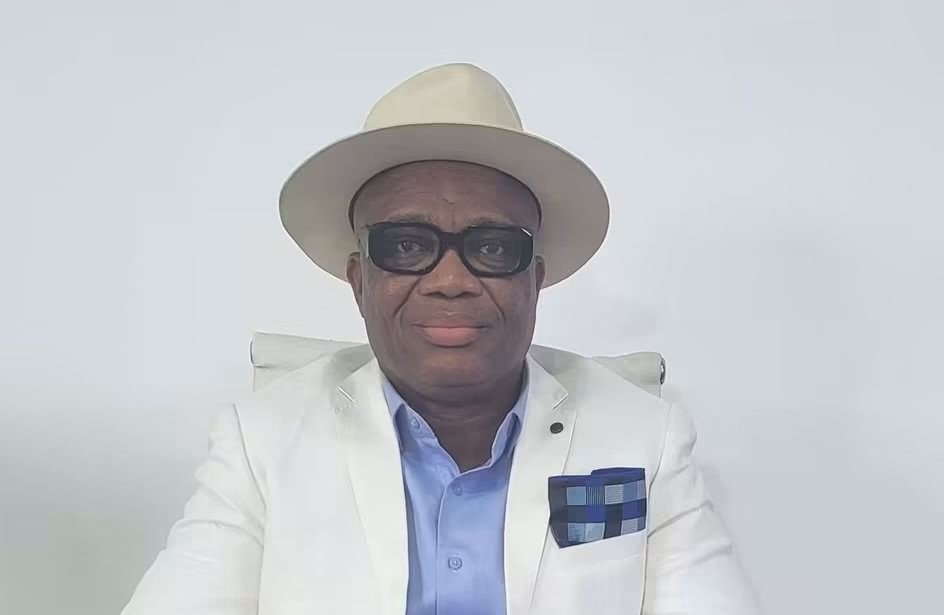
MONROVIA – Liberian politician and businessman Simeon Freeman has challenged the Central Bank of Liberia’s plan to print up to L$79 billion in new Liberian dollar banknotes, arguing that the country should accelerate digital payments instead of committing millions of United States dollars to producing and replacing physical currency.
By: Sampson W. Weah – sampsonwweah7@gmail.com
Mr. Freeman says the proposed currency program represents an opportunity cost for an economy that, in his view, could redirect resources toward housing, industrial development, job creation and digital financial infrastructure.
The Central Bank’s proposal has already undergone legislative scrutiny, with the House of Representatives authorizing the CBL to print up to L$79 billion following hearings involving government officials, banking-sector representatives and other stakeholders.
The House committee said the program was intended primarily to replace deteriorated and mutilated notes, improve cash availability and maintain the efficiency of Liberia’s payment system.
He argues that the scale of the proposed printing is difficult to justify when compared with the previous currency replacement exercise.
According to figures cited by Freeman, the CBL printed approximately L$48.7 billion between 2021 and 2023 at a cost of about US$45 million, an exercise that included replacing the previous family of banknotes, introducing coins and addressing damaged currency.
He contrasts that with the current proposal to print L$79 billion between 2026 and 2030, which he says is largely intended to replace worn currency and introduce a higher denomination, including the proposed L$2,000 note.
Freeman estimates that the program would amount to roughly L$15.8 billion in annual currency production, and argues that the cost of repeatedly replacing physical money demonstrates the need for a broader transition toward digital payments.
Freeman points to Liberia’s growing digital-payment sector as evidence that the country already has an alternative infrastructure capable of reducing dependence on physical cash.
The CBL’s 2025 Annual Report recorded mobile-money transactions totaling L$585.88 billion and US$6.92 billion during the year. The report also said Liberia’s payment-system modernization accelerated in 2025, including the expansion of the Inclusive Instant Payment System and other digital payment infrastructure.
Freeman argues that the growth of mobile money demonstrates that Liberians are increasingly comfortable conducting financial transactions electronically.
He therefore wants policymakers to place greater emphasis on expanding digital payment systems, particularly for everyday transactions, government payments and commercial activity.
The CBL, however, has presented a different justification for the proposed printing.
During legislative hearings, CBL officials cited the need to replace worn and mutilated notes, maintain adequate cash reserves and respond to growing demand for physical currency. The Central Bank has also said that a significant portion of banknotes previously printed between 2021 and 2024 could become unfit for circulation by 2030 because of normal wear and tear.
The House Committee on Banking and Currency subsequently endorsed the proposal, stating that the printing would support currency availability and the functioning of Liberia’s payment system.
Freeman maintains that the country should instead treat the situation as a reason to accelerate digital transformation.
He argues that resources allocated to producing and replacing physical currency could be redirected toward expanding electronic payment infrastructure and reducing the economy’s dependence on cash.
Freeman also made a political allegation, claiming that the currency-printing exercise could be connected to political financing.
He alleged that the money could be used to support Unity Party campaign activities, drawing a comparison with what he claims occurred during the 2009–2011 period.
That allegation has not been independently established in the material reviewed for this report and is presented here as Freeman’s claim.
The broader debate, however, has already raised questions among lawmakers and economic stakeholders about the appropriate size, timing and safeguards surrounding the proposed currency program. Some legislators have called for greater scrutiny of the proposal and its potential monetary and economic effects.
Freeman says a future administration under his leadership would pursue a more aggressive digital-payment strategy.
“As President, I will digitize payment and work with payment platforms to expand usability and reduce Liberia’s exposure to reprinting liabilities,” Freeman said.
