


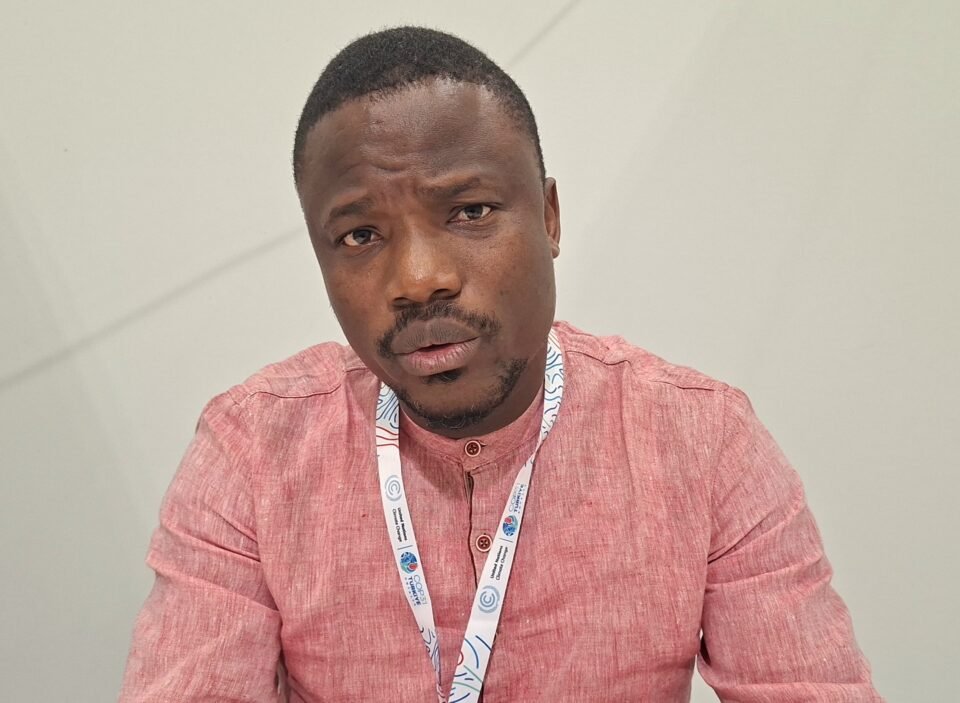
Liberia’s lead negotiator on Action for Climate Empowerment says Africa will not accept climate decisions that undermine its interests, insisting that adequate financing must be secured to implement climate education, training, and public awareness programs.
ANTALYA, TURKEY – Liberia is taking a firm position in ongoing climate negotiations at COP31, with the country’s lead negotiator on Action for Climate Empowerment warning that African nations will not accept agreements that fail to protect their interests.
By: Trokon S. Wrepue – trokon1992seokin@gmail.com
Mr. Teddy Taylor a Liberian negotiator, who also serves as Assistant Director in the Environmental Protection Agency’s Department of Multilateral Environmental Agreements for Extended Relations, is leading coordination on Action for Climate Empowerment under the African Group of Negotiators.
Speaking in an interview in Antalya, Turkey, Taylor said Africa’s major concern is securing adequate financing to implement climate education, public awareness, training, public participation, and access to climate-related information across the continent.
Action for Climate Empowerment, commonly known as ACE, is a thematic area under the United Nations Framework Convention on Climate Change that seeks to strengthen public understanding and participation in addressing climate change.
He explained that the ongoing discussions are focused on developing an action plan under the Glasgow Work Program, which replaced the earlier Doha Work Program.
The action plan has four priority areas: policy coherence, coordinated action, tools and support, and means of implementation.
According to the Teddy P. Taylor, African countries have already developed various climate education strategies, policies, and programs, but the major challenge remains the lack of financial resources to implement them.
The young Liberian said Liberia and other African countries are therefore pushing for clear financial commitments that would translate existing climate policies into practical results.
The negotiations, however, have encountered disagreements over several technical issues, with the African Group insisting that its concerns must be adequately reflected in the final text.
With COP31 approaching its conclusion, the Liberian negotiator disclosed that Africa has requested a procedural conclusion on the Action for Climate Empowerment agenda rather than accepting an agreement that does not address the continent’s priorities.
Mr. Taylor explained that two possible procedural outcomes are being considered: Rule 16, which would leave the matter without a decision and allow discussions to resume at a subsequent session, or procedural conclusion, which would preserve areas of agreement already reached without reopening the entire negotiation process.
The African Group is pushing for procedural conclusion, arguing that it would protect the progress already made during the negotiations.
However, Taylor warned that Africa would not move forward with an action plan that fails to guarantee adequate financing for climate education, public awareness, training, and other priority activities.
Another major concern raised during the negotiations involves the proposed terminology of “information integrity,” which the African Group says requires further clarification before countries can accept its inclusion in the text.
The Liberian official said African negotiators are concerned about the possible implications of the terminology, particularly where sensitive information and national security interests could be affected.
The negotiator also disclosed that the African Group has communicated its concerns to the COP31 Presidency, jointly led by Turkey and Australia, insisting that decisions must emerge from consultations and agreement among participating parties.
Emphasizing Africa’s negotiating position, the Liberian official declared that the continent is no longer prepared to accept decisions imposed on its countries without adequate consideration of their interests.
The official said the African Group is leaving Antalya with confidence that it has defended its negotiating priorities, even if that means concluding COP31 without an agreement on the outstanding issues.
“Africa is no longer willing to be bullied in the negotiation room,” the negotiator stressed, adding that “no decision is better than a bad decision.”
The official further maintained that the United Nations climate negotiation process must remain party-driven rather than allowing the COP Presidency to impose decisions on countries.
According to the negotiator, African nations must be given sufficient opportunity to reach common ground on issues affecting their people, particularly those relating to climate financing and implementation.
The Liberian official’s position comes as African countries continue to demand greater financial and technical support to address climate change, despite contributing a relatively small share of global greenhouse gas emissions.
As COP31 draws to a close, the unresolved Action for Climate Empowerment negotiations could carry over to subsequent climate discussions, including the next negotiating session in Bonn, Germany.
The next annual climate conference, COP32, is scheduled to take place in Addis Ababa, Ethiopia, giving African countries another opportunity to advance their priorities on the global climate agenda.
