


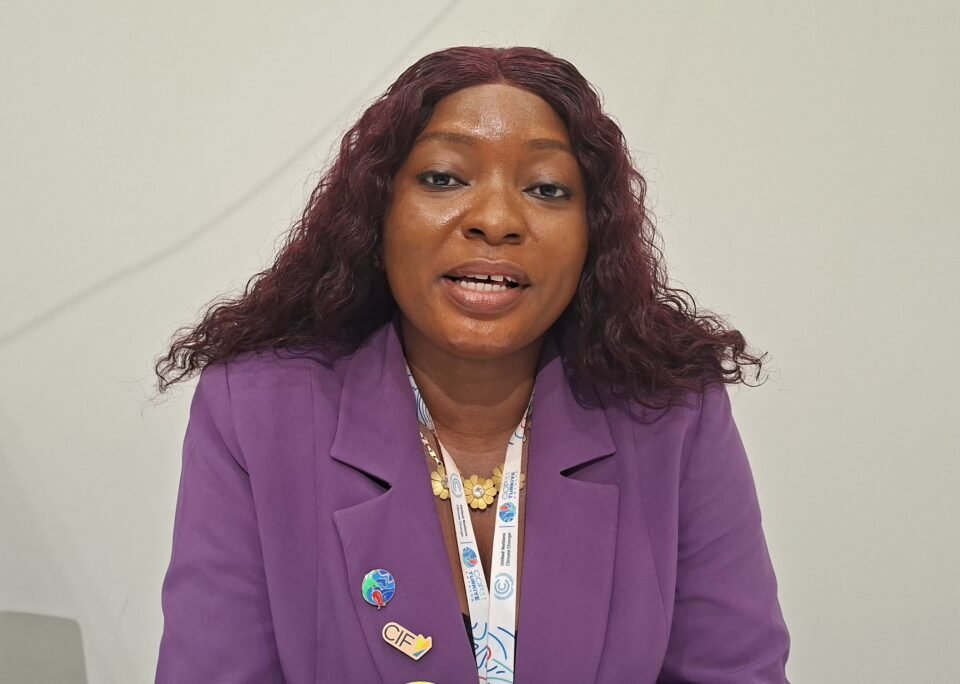
ANTALYA, TURKEY – Liberia is intensifying its call for increased international climate financing to support the implementation of its Nationally Determined Contribution (NDC 3.0), with a strong emphasis on ensuring that climate funds reach vulnerable communities, women, young people and smallholder farmers.
By Trokon S. Wrepue – trokon1992seokin@gmail.com
Speaking in an interview with Liberia Excellent News Network (LENN) on the sidelines of the United Nations Climate Conference (COP31) in Antalya, Turkey, Norwu Kolu Harris, a climate policy and justice advocate with more than 15 years of experience, said access to adequate climate finance remains critical to Liberia’s ability to deliver on its commitments under the Paris Agreement.
Harris, who serves as the NDC Partnership In-Country Facilitator at Liberia’s Environmental Protection Agency (EPA), explained that Liberia’s participation at COP31, described as the Implementation COP, is largely focused on mobilizing the financial resources needed to translate the country’s climate commitments into practical results.
She said Liberia is advocating for financing across the nine priority sectors identified in its NDC 3.0, including energy, transport, agriculture, land use and forestry, infrastructure and coastal zone management, among other areas.
According to her, these sectors represent critical areas of the country’s climate response, but achieving the targets established under the national climate plan will require substantial financial and technical support from international partners.
Harris emphasized that Liberia, as one of the world’s least developed countries, does not have sufficient domestic resources to independently finance its climate ambitions.
She disclosed that Liberia has committed to reducing its greenhouse gas emissions by 64 percent below the business-as-usual projection, but only 10 percent of that target can be financed through domestic resources.
The remaining 54 percent, she explained, is conditional on international support.
“Why 54% of that 64% were dependent on international support,” Harris stated, stressing that developed countries must contribute their fair share to enable vulnerable nations to meet their climate obligations.
She argued that climate finance should not be treated as charity but as a necessary commitment to help countries that contribute relatively little to global emissions confront the growing consequences of climate change.
Liberia seeks inclusive climate financing for women and young people
Beyond securing funding for national climate program, Harris said Liberia is also pushing for an inclusive financing approach that guarantees women, young people and vulnerable communities meaningful participation in climate action.
She described Liberia’s NDC 3.0 as one of the most inclusive national climate commitments, noting that it contains specific provisions designed to ensure women and young people benefit from climate-related investments.
One of the key provisions, she disclosed, is a commitment to ensure that women have access to 20 percent of grant-based climate financing.
“That’s because we put a lot of work into ensuring that from the development of our NDC, we had inclusive participation,” she explained.
Harris said the commitment goes beyond allocating financial resources, as the national climate plan also prioritizes capacity-building opportunities to help women access and manage climate funding.
She further highlighted provisions aimed at improving access to climate finance for smallholder farmers and cooperatives, many of whom struggle to meet the complicated eligibility requirements and administrative conditions attached to international funding mechanisms.
According to her, Liberia wants to remove unnecessary barriers that prevent vulnerable groups from benefiting from climate investments.
She stressed that women, particularly those engaged in agriculture and other climate-sensitive livelihoods, must not be left behind as the country pursues its climate targets.
Climate money must reach ordinary Liberians
A major concern raised by Harris is the gap that often exists between international climate financing commitments and the actual delivery of resources to the communities that need them most.
She maintained that securing climate finance at international conferences is only one part of the process; ensuring that the money reaches intended beneficiaries is equally important.
Harris said Liberia is working through different negotiating blocs, including the African Group of Negotiators and the Least Developed Countries group, to influence international climate decisions and ensure that funding arrangements reflect the needs of vulnerable populations.
“We are not begging for climate finance, and these are something that we’re entitled to, to be able to adapt and mitigate the climate crisis,” she declared.
She explained that Liberia’s negotiators are closely reviewing proposed decisions and negotiating texts to ensure that the language adopted at COP31 supports equitable access to climate resources.
For Harris, climate finance cannot be considered successful if it remains concentrated at the international or national institutional levels without reaching communities directly affected by climate change.
“If it has not reached to the grassroots, it’s not a climate finance that is equitable and inclusive,” she emphasized.
She added that Liberia is also working to develop bankable climate projects that can attract funding through international financing mechanisms, including the Green Climate Fund, the Global Environment Facility and the Loss and Damage Fund.
Harris disclosed that Liberia has already submitted proposals to the Loss and Damage Fund, expressing hope that these financing opportunities will support program that directly benefit vulnerable communities.
Liberia wants concrete results from COP31 negotiations
On the intensity of negotiations at COP31, Harris described the discussions as demanding, with Liberia and other developing countries pushing for concrete outcomes across different climate-related thematic areas.
She said Liberia is concerned about the possibility of important negotiations being deferred to the next session of the UNFCCC subsidiary bodies, scheduled for June next year, rather than producing decisions before the conclusion of COP31.
She noted that Liberia wants meaningful progress on adaptation, loss and damage, climate finance, mitigation, gender, youth participation and other critical areas.
According to her, the country’s negotiating team is working with different international blocs to ensure that the final decisions reflect Africa’s priorities and Liberia’s specific climate financing needs.
Harris calls for national ownership of Liberia’s climate commitments
While international climate finance remains central to Liberia’s climate ambitions, Harris emphasized that implementing NDC 3.0 cannot be left to the Environmental Protection Agency or government of Liberia institutions alone.
She called on all Liberians, including women, young people, men, children and private-sector actors, to recognize the national climate plan as a collective commitment requiring participation from every sector of society.
“The NDC is for Liberia, it’s not a one institution document, it’s Liberia’s commitment,” she stressed.
Harris said the successful implementation of the national climate plan will require collective responsibility, technical expertise, adequate resources and sustained cooperation among government ministries, agencies, commissions, civil society organizations, communities and the private sector.
She also encouraged institutions and stakeholders responsible for implementing the NDC to regularly report their progress to the appropriate sector leads and reporting institutions.
Such reporting, she explained, will help Liberia monitor implementation at the national level and provide the necessary information to the United Nations Framework Convention on Climate Change (UNFCCC).
She expressed optimism that the coordination demonstrated by Liberia’s delegation at COP31 would continue after the conference, allowing government institutions and other stakeholders to work together toward achieving the country’s climate commitments.
The bigger picture
Liberia’s climate financing demands reflect a wider challenge confronting African countries and other least developed nations: ambitious climate commitments cannot be translated into meaningful action without predictable, accessible and adequate international support.
For Liberia, the challenge is twofold. The country must mobilize the resources required to reduce emissions and strengthen resilience to climate impacts while ensuring that the benefits of climate investments reach the women, farmers, young people and communities most exposed to environmental risks.
Harris’s message from COP31 is therefore clear: international climate finance must move beyond conference commitments and become tangible support for people on the ground.
As Liberia works to implement its NDC 3.0, the success of its climate agenda will depend not only on the amount of financing secured but also on how effectively those resources are distributed, monitored and used to improve the lives of ordinary Liberians.
