


Opposition ANC Political Leader Says Liberia Risks Mortgaging Future Mineral Revenues Without Adequate Safeguards
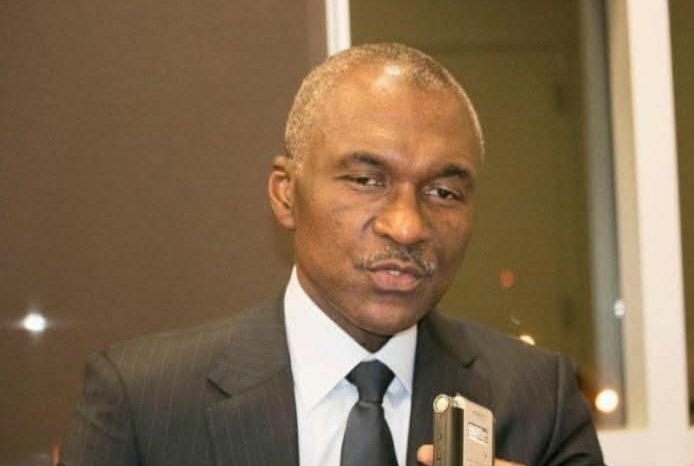
MONROVIA – Opposition Alternative National Congress (ANC) Political Leader Alexander B. Cummings has cautioned President Joseph Nyuma Boakai against proceeding with the proposed US$5.7 billion Master Infrastructure Development Agreement (MIDA) between the Government of Liberia and Bea Mountain Mining Corporation and its parent company, MNG Gold, warning that the arrangement could place a significant financial burden on future generations.
By: Trokon S. Wrepue – trokon1992seokin@gmail.com
In a statement responding to President Boakai’s decision to sign the proposed agreement, Cummings described the development as a matter of grave national importance, arguing that its implications extend beyond the construction of roads, power plants, railways and other infrastructure to the future ownership, management and utilization of Liberia’s mineral wealth.
While acknowledging the country’s urgent infrastructure needs, including poor road conditions, unreliable electricity, high energy costs and limited economic opportunities, the ANC leader stressed that the desire for development should not lead the government to compromise transparency, accountability and sound economic judgment.
Cummings said Liberia must avoid becoming what he described as an “Esau Generation,” referencing the biblical account of Esau, who traded his birthright for a meal to satisfy an immediate hunger.
He argued that Liberia risks making a similar mistake if it sacrifices long-term national resources to address immediate infrastructure challenges without carefully examining the financial and economic consequences.
According to him, the central issue is not whether Liberia needs infrastructure, but whether the country is receiving adequate value and protection in exchange for committing future national revenues to finance the proposed projects.
The ANC political leader noted that although the US$5.7 billion arrangement may appear attractive because it promises large-scale infrastructure development without immediate budgetary expenditures, the government must explain who will ultimately bear the cost of the projects and whether the country will receive fair value for its natural resources.
He maintained that there is no such thing as free infrastructure, emphasizing that the proposed arrangement requires careful scrutiny because it could involve the commitment of future revenues generated from Liberia’s natural resources for decades.
Cummings identified several areas of concern, including possible violations of the Public Procurement and Concessions Act, the absence of competitive bidding, the lack of independent resource valuation and engineering assessments, potential overpricing of infrastructure projects and the automatic deduction of future government revenues.
He also raised concerns about significant fiscal and contingent liabilities, environmental and social risks, possible governance and conflict-of-interest issues, and the potential threat the agreement could pose to Liberia’s long-term fiscal sustainability.
Of particular concern to the opposition leader is what he described as uncertainty surrounding Liberia’s final financial obligations under the proposed arrangement.
He argued that although the agreement is publicly valued at approximately US$5.7 billion, certain provisions could allow additional costs, adjustments and government obligations that may substantially increase the amount eventually recovered through future revenue deductions.
Cummings further questioned indications that royalties, income taxes, dividends and other government revenues generated from Liberia’s natural resources could be redirected toward repayment over an extended period.
He warned that committing such revenues without proper valuation and independent oversight could leave future governments with limited financial benefits from the country’s natural resources.
Describing the matter as a sovereignty, human rights and intergenerational justice issue, Cummings said Liberians must know whether the agreement will leave future generations with valuable national assets or long-term financial obligations.
He called on the Boakai administration to suspend further action on the proposed arrangement until a series of safeguards are fully addressed.
Among the measures he is demanding are independent valuation of Liberia’s underlying natural resource base, independent engineering and feasibility assessments, transparent and competitive procurement processes, and the full publication of all transaction documents.
He also wants the agreement subjected to legislative review and public hearings, comprehensive environmental and social impact assessments, independent fiscal risk and debt sustainability analysis, and scrutiny by internationally credible transaction advisers.
Additionally, Cummings called for independent certification of project costs and completed works, as well as public disclosure of all contingent liabilities and future revenue commitments associated with the agreement.
The ANC leader was quick to clarify that his position should not be interpreted as opposition to infrastructure development, foreign investment or public-private partnerships.
He said his party supports the responsible use of Liberia’s natural resources to accelerate national development but opposes secrecy, inadequate public disclosure and arrangements that could commit future generations to massive financial obligations without sufficient safeguards.
“Liberians should never be forced to choose between development and transparency,” Cummings emphasized, insisting that infrastructure development and accountability must go hand in hand.
He further argued that the quality of leadership should not be measured by how quickly agreements are signed but by whether such agreements protect the national interest, withstand public scrutiny and deliver sustainable benefits to generations of Liberians.
Cummings warned that the true consequences of the proposed agreement may only become evident 20, 30 or even 40 years from now, when future generations will determine whether the arrangement delivered roads, electricity, employment and prosperity or left the country with financial obligations that should have been questioned before approval.
He therefore urged the government to pause the process, review the agreement, disclose all relevant documents and consult the Liberian people before taking further steps.
Emphasizing that the matter transcends political differences, Cummings said Liberia’s natural resources belong to all citizens, including market women, farmers, fishermen, students and generations yet unborn.
He described the country’s leaders as temporary custodians of a national inheritance that must be protected and managed in the best interest of all Liberians.
Cummings concluded that the objective should not simply be to build infrastructure but to ensure that projects are implemented at the right cost, under appropriate conditions and through arrangements that guarantee lasting benefits for the Liberian people.
His statement adds to growing public and political scrutiny surrounding the proposed US$5.7 billion Master Infrastructure Development Agreement, particularly questions about transparency, the use of future mineral revenues, the financial obligations of the state and the long-term implications for Liberia’s economic sovereignty.
