


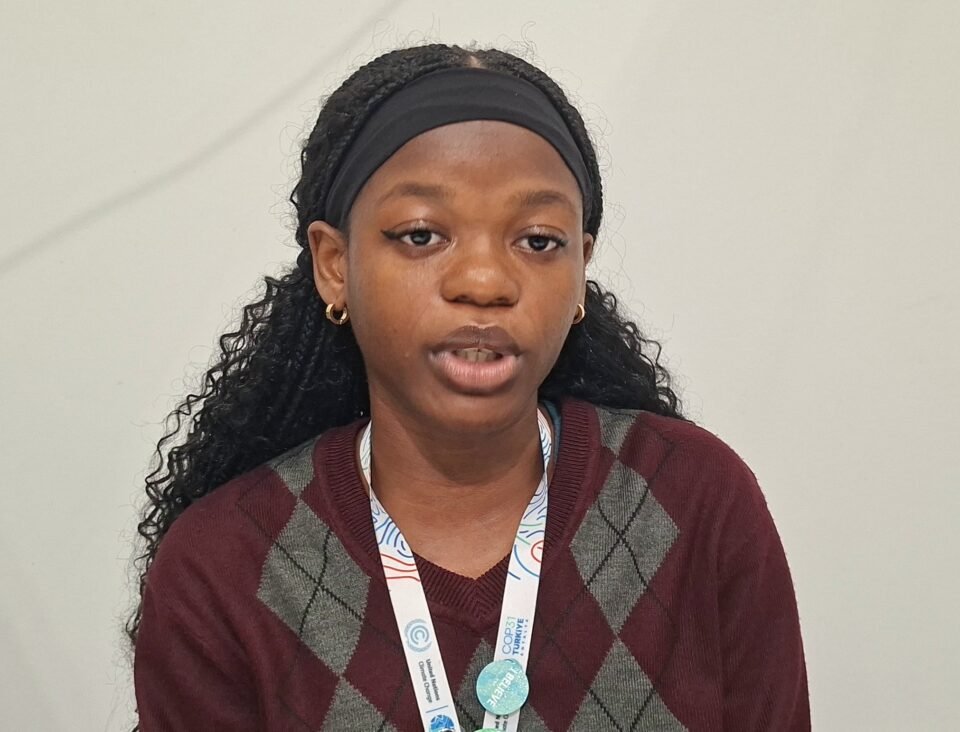
Arpu Elizabeth Juasemai urges investment in climate education, rural youth empowerment and African representation in global climate negotiations
ANTALYA, TURKEY – At just 16 years old, Arpu Elizabeth Juasemai is already making her voice heard on one of the world’s most pressing challenges – climate change – with a strong message that young people, particularly those in vulnerable communities, must be given the opportunity to participate in shaping decisions about their environmental future.
By Trokon S. Wrepue – trokon1992seokin@gmail.com
As Liberia’s youngest delegate at the United Nations Climate Conference (COP31) in Antalya, Turkey, Juasemai is calling for increased investment in climate education, stronger partnerships with youth organizations and greater representation of African young people in international climate negotiations.
Speaking in an interview with Liberia Excellent News Network (LENN) during the conference, the young climate and girls’ rights advocate said her participation at COP31 has given her a rare opportunity to witness firsthand how international climate policies, rules and commitments are developed and negotiated.
She described the experience as both educational and inspiring, particularly because decisions reached at the conference will influence how countries, including Liberia, respond to climate change in the coming years.
“The process has been good. I’ve seen a lot of really important and wonderful things. I’ve experienced a lot of different cultures and it just feels so good to be behind the scenes and see how these negotiations are made,” she said.
For Juasemai, attending COP31 goes beyond representing Liberia at an international gathering. It is an opportunity to understand the decision-making processes that determine how governments respond to climate challenges and how those commitments are translated into action at home.
Her participation comes at a time when Liberia continues to confront serious environmental challenges, including recurrent flooding, land degradation, deforestation and the destruction of forest resources.
Against this backdrop, she believes that while international climate financing remains important, Liberia must also begin strengthening its local capacity, particularly by preparing young people to become active participants in climate action.
Climate education must begin before the money arrives
Juasemai believes that the fight against climate change should not depend entirely on the availability of international funding. Instead, she argues that Liberia must begin preparing its people, especially young people, to understand environmental challenges and contribute to solutions.
She acknowledged ongoing efforts by developing countries to secure climate financing but stressed that young people must be equipped with the knowledge and skills needed to use available resources effectively.
According to her, climate financing should support youth organizations, school-based initiatives and community program that promote environmental awareness and climate education.
She said young people have a critical role to play in spreading information about climate change, mobilizing their peers and encouraging environmentally responsible practices within their communities.
“I always ask for young people to be more involved in environmental sustainability and climate justice and climate action and climate empowerment,” she emphasized.
For the young advocate, providing financial support for climate education is particularly important because the next generation will inherit the consequences of decisions being made today.
She believes that empowering young people with knowledge will help create a generation capable of responding to environmental threats and holding decision-makers accountable for climate commitments.
Rural young people must not be left behind
One of Juasemai’s strongest concerns is the limited access young people in rural Liberia have to climate advocacy platforms, international opportunities and organizations working on environmental issues.
She explained that while young people in urban areas may have better opportunities to participate in climate program, those living in remote and vulnerable communities often lack the financial resources, information and institutional support needed to become involved.
She raised the issue during one of her panel discussions at COP31, calling for stronger collaboration between youth organizations, government institutions and international development partners to bridge the gap.
The teenager argued that climate advocacy should not remain concentrated in Monrovia or among young people who already have access to international platforms.
Instead, she wants youth organizations and climate advocates in urban centers to take their program directly to rural communities, where young people are often among those most exposed to climate-related disasters.
“We have to go to them because they can’t come to us,” she stressed.
She believes that expanding youth engagement into rural counties would allow more young people to understand climate change, share their experiences and contribute local knowledge to national and international discussions.
According to her, many of the platforms and opportunities available to young people are not widely known, making community outreach and information-sharing essential to expanding participation.
She is therefore advocating partnerships that will enable youth groups to reach underserved communities, provide environmental education and create opportunities for rural young people to participate in climate decision-making.
‘You are never too young to start advocating for change’
Perhaps the most powerful message Juasemai wants to take back to Liberia is that age should never be a barrier to environmental advocacy.
Reflecting on her experience at COP31, she said meeting other young climate advocates, including teenagers younger than herself, changed her perception of what young people can achieve.
She recalled that before becoming involved in advocacy, she often questioned whether she was too young to make a meaningful contribution.
However, meeting young advocates from different countries convinced her that meaningful change does not require waiting until adulthood.
She believes many Liberian children and teenagers may have similar doubts about their ability to influence environmental decisions, but insists that they should begin taking action now.
“You’re never too young to start advocating for change. This is our planet. There’s literally no planet B. We don’t have a backup planet that after this one is destroyed, we can go and live on the other one,” she declared.
Her message is particularly directed at young Liberians who may feel excluded from conversations about climate change or believe that environmental advocacy is reserved for adults and established organizations.
She wants them to recognize that they can contribute through community awareness, school activities, environmental education and participation in youth-led initiatives.
Taking the COP31 experience back to Liberian schools
Beyond the international discussions, Juasemai said she intends to use her experience at COP31 to strengthen climate awareness among students when she returns home.
She disclosed that the Youth Climate Change Initiative has already worked with some schools in Broadville, with plans to expand its activities and reach more students.
The young Liberian said her immediate priority will be to visit students, share lessons from COP31, explain what she witnessed during the negotiations and encourage more young people to become involved in climate advocacy.
Through these engagements, she hopes to inspire students who may eventually represent Liberia at future international climate conferences.
Juasemai believes that exposing young people to global climate discussions at an early stage will help build their confidence, expand their knowledge and prepare them for leadership roles in environmental protection and policymaking.
Africa needs more young people at the negotiating table
Juasemai also expressed concern about the limited representation of African young people in some of the international climate negotiation spaces she observed at COP31.
She said she hopes to see more Liberians, Nigerians, South Africans, Ghanaians and other African youth participating directly in negotiation rooms, where decisions affecting their countries and communities are made.
According to her, Africa has many talented and knowledgeable young people, but a lack of opportunities, financial resources and access to information continues to prevent many from participating in international climate processes.
She argued that this exclusion is particularly concerning because young people in vulnerable African communities are among those experiencing the consequences of climate change.
Their experiences and perspectives, she said, should be represented in the discussions that shape international climate policies.
“We have a lot of brilliant young minds. But most of them don’t have opportunities,” she said, adding that young Africans must be given the necessary platforms to share their expertise and contribute to negotiations.
She expressed hope that future climate conferences, particularly the next COP scheduled to take place in Ethiopia, will create greater opportunities for African youth to participate in national delegations and international decision-making.
For Juasemai, youth participation should not be limited to attending conferences or speaking during side events. Young people must also have meaningful opportunities to contribute to negotiations and influence the policies that will determine their future.
A future environmental lawyer
Despite her young age, Juasemai already has a clear vision of the professional path she wants to pursue.
She aspires to become an environmental lawyer, a career she believes will allow her to contribute to environmental protection, climate justice and international climate policymaking.
Her ambition reflects a broader understanding that addressing climate change requires more than environmental awareness. It also demands strong policies, effective laws, accountability and the protection of communities whose livelihoods are threatened by environmental degradation.
As a secondary school valedictorian, her growing involvement in climate advocacy, UNICEF initiatives and Liberia’s NDC 3.0 engagement demonstrates her commitment to connecting education with practical environmental action.
Her participation in three panel discussions at COP31 further provided an opportunity to contribute to conversations on youth inclusion and climate justice at the international level.
The bigger message
Juasemai’s participation at COP31 highlights an important question for Liberia and the African continent: how can countries address the climate crisis if the young people who will inherit its consequences are not adequately involved in shaping the solutions?
Her argument is that climate action must begin with education, inclusion and equal access to opportunities. International climate financing is important, but it must also translate into practical support for youth organizations, schools and vulnerable communities.
For Liberia, this means creating stronger partnerships between government institutions, international organizations, civil society and young people, while ensuring that rural communities are not excluded from the national climate agenda.
At just 16, Juasemai is already challenging the perception that young people must wait until adulthood to influence public policy and advocate for change.
Her message from COP31 is simple but powerful: the future of the planet cannot be protected without the participation of the generation that will inherit it – and there is no reason to wait until tomorrow to begin.
