


MONROVIA – The National Housing Authority (NHA) says it is taking steps to address Liberia’s growing housing deficit through the development of new housing units, increased private-sector investment, and initiatives aimed at making it easier for Liberians in the diaspora to invest in housing back home.
By: Gegee Brima
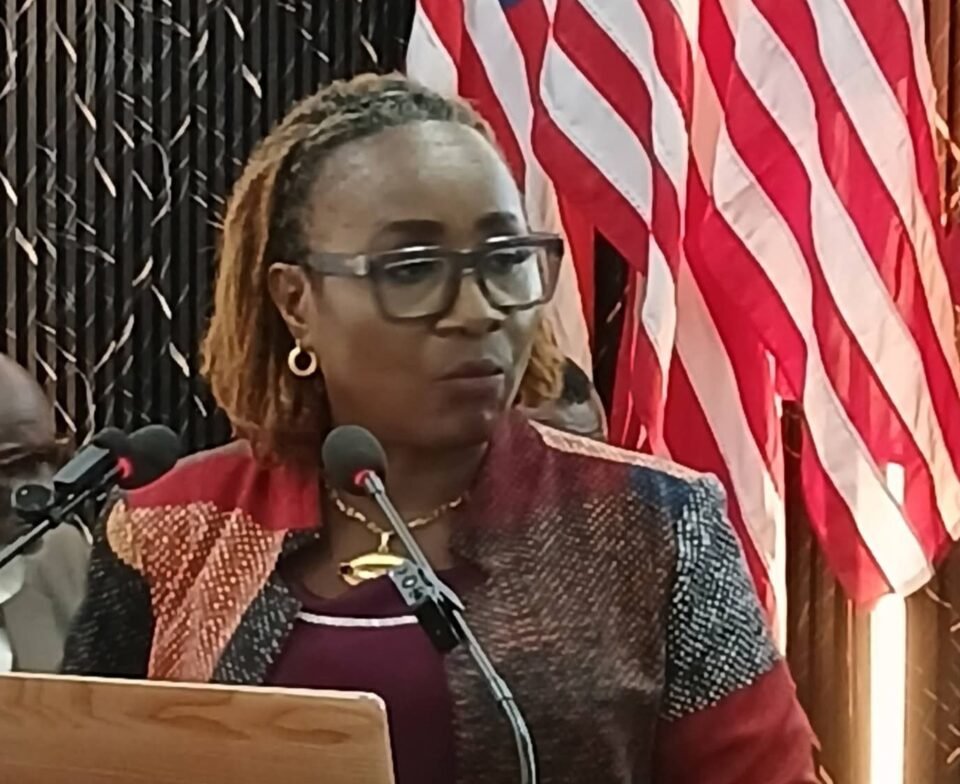
NHA Managing Director Florence K. Geegbae made the disclosure Tuesday at the Ministry of Information’s regular press briefing in Monrovia, where she outlined the Authority’s ongoing programs, achievements and plans for the housing sector.
According to Geegbae, Liberia currently needs approximately 200,000 new dwelling units to reduce overcrowding, while another 153,035 units are needed to keep pace with population growth in urban areas. She said an additional 4,891 units are required annually to replace old and damaged structures, while about 70 percent of the population lives in slum communities under difficult housing conditions.
Citing World Bank data, Geegbae said Liberia could require approximately 512,000 urban dwellings by 2030, highlighting the urgent need for coordinated public and private investment in the housing sector. She said the NHA has received housing designs from four private-sector partners and incorporated the proposals into its development plans.
The NHA currently has three approved housing designs—three-bedroom units, two-bedroom units and two-bedroom duplexes—all approved by the Ministry of Public Works. Geegbae explained that housing projects must undergo several regulatory processes, including architectural design, preparation of bills of quantities, approval by the Ministry of Public Works, acquisition of permits and concessionary approval from the Ministry of Finance and Development Planning.
Geegbae said the Authority is also prioritizing investment by Liberians in the diaspora. Following the NHA’s participation in a diaspora conference in the United States, the Authority identified land transaction concerns and limited knowledge of development procedures as major challenges facing potential investors.
In response, the NHA plans to establish a Housing Investment Portal that will provide land verification, permit checklists, construction cost calculators and a directory of licensed professionals. The platform is expected to guide investors from their initial inquiry through the completion of their housing projects.
The Authority also plans to introduce an estate development roadmap and an NHA Partnership Program to provide diaspora investors with advisory support on land ownership, zoning, planning and permitting. Geegbae said the NHA will work with the Liberia Land Authority to help investors navigate regulatory requirements and, where possible, speed up the process.
She said the NHA is also working toward establishing a pre-verified land bank containing parcels that have been verified by the Liberia Land Authority and cleared for housing projects.
On land acquisition, Geegbae disclosed that the NHA has negotiated and commenced the acquisition of approximately 578 acres for housing development. About 452 acres are privately sourced, while other parcels have been made available by the Government of Liberia.
She said the lands are located in areas including Bodogba in Bong County, Weala in Margibi County, Johnsonville, Bomi, Lofa, Nimba and Grand Bassa counties. Engagements are also ongoing with authorities in Grand Gedeh, Gbarpolu and River Gee counties, although surveys have not yet been completed on some properties.
Geegbae announced that the NHA is preparing to move forward with a major 482-unit housing development, with contracts expected to be signed by the end of the week or early the following week. Preparations are also underway for a broader 600-unit housing project, including land surveys and soil testing, with land clearing expected to begin soon.
The NHA Managing Director said the Authority is identifying potential buyers, or “off-takers,” before construction begins. She disclosed that 3,340 civil servants have already enrolled in the NHA’s off-taker program, which will offer payment options including cash purchases, mortgages and rent-to-own arrangements.
Geegbae said the NHA is also discussing plans for fully planned residential communities where diaspora investors can develop homes within properly serviced areas. The proposed communities could include housing, schools, health facilities, markets and commercial spaces, supported by water, electricity, sewage systems and proper zoning.
She said the initiative is intended to prevent scattered and uncoordinated housing development.
Housing Insurance
Geegbae disclosed that the NHA is working with NASSCORP to establish a housing insurance arrangement.
She said the two institutions are expected to formalize the initiative through a Memorandum of Understanding to ensure that homes constructed under NHA programs, including government-funded and public-private partnership projects, are insured.
According to her, housing insurance is an important requirement for investors and an international standard that Liberia needs to embrace.
Partnership With Shelter Afrique
The NHA Managing Director also disclosed that the Authority has signed a Memorandum of Understanding with Shelter Afrique Development Bank to strengthen cooperation in affordable housing and sustainable urban development.
She said the partnership is expected to support efforts to expand access to affordable and sustainable housing in Liberia.
Despite the progress, Geegbae said the NHA remains constrained by its existing legal framework, which dates back to 1960. She said the current law does not provide the Authority with sufficient regulatory and monitoring powers to effectively manage the housing sector.
According to Geegbae, a new NHA Act has already undergone validation and other required processes and is expected to be submitted to the National Legislature when lawmakers return.
She said the proposed legislation would strengthen the NHA’s regulatory and monitoring authority, enable it to address rental-related issues and establish a National Housing Trust Fund.
Geegbae said the proposed framework is intended to provide greater protection for Liberians and improve regulation of housing costs and rental practices.
She also announced that the NHA now has a functional website through which the public can access information about its programs, housing opportunities and activities. She encouraged Liberians at home and abroad to visit www.nha.gov.lr for more information.
Geegbae said the Authority plans to publish regular housing development reports covering investments and emerging opportunities in Liberia’s residential housing sector.
She said improved access to information would help build confidence among diaspora investors and encourage more Liberians abroad to invest in housing development at home.
The NHA Managing Director said the Authority remains committed to working with government agencies, private developers, financial institutions and international partners to address Liberia’s housing deficit and expand access to affordable, properly planned housing.
