


NATIONAL NEWS
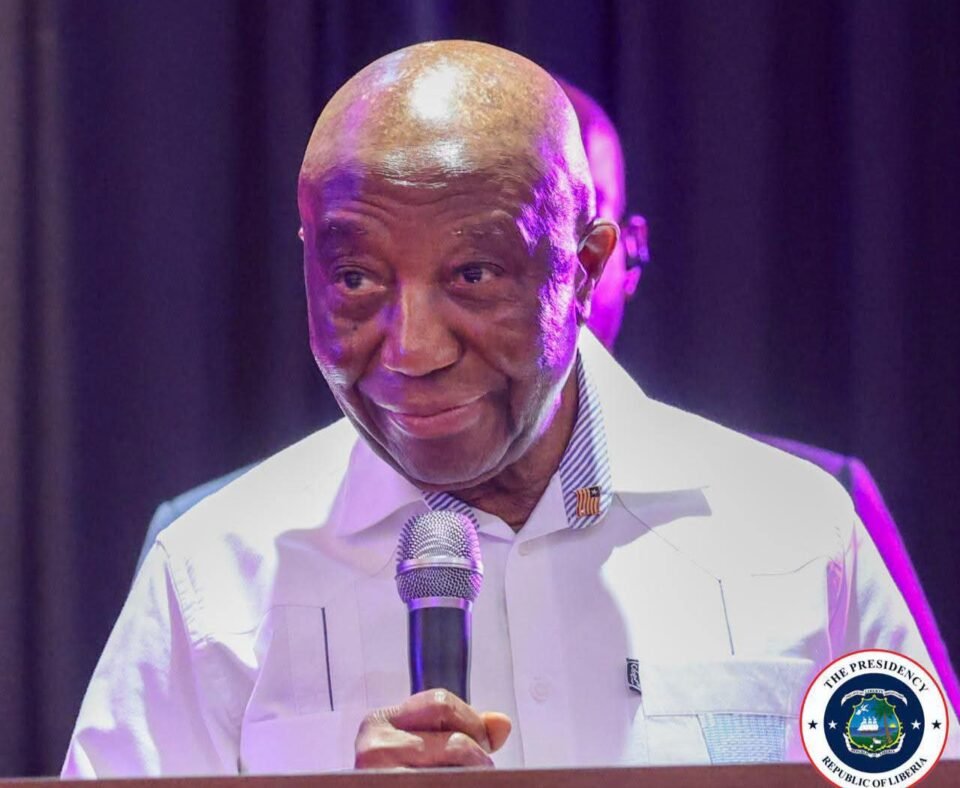
MONROVIA – President Joseph Nyuma Boakai has assured Liberia’s media community that his administration will never seek to muzzle or control the press, declaring that journalists must remain free to question, investigate, criticize and hold public institutions accountable.
By: Trokon S. Wrepue – trokon1992seokin@gmail.com
But the President’s promise of openness and respect for the Fourth Estate came as leaders of Liberia’s media community used the same Second Annual Presidential Media Dinner to challenge his government over declining women’s representation at the Cabinet level, limited access for women journalists, the financial crisis facing media institutions and the absence of major reforms promised to strengthen the sector.
Speaking Saturday, September 12, at the EJS Ministerial Complex in Congo Town, President Boakai said his government does not see the media as an institution to be controlled, but rather as an essential partner in Liberia’s democratic development.
He called for a relationship between the government and the press based on mutual respect, openness, professionalism and shared responsibility to the Liberian people.
The President encouraged journalists to continue scrutinizing those in authority, insisting that reporting positively about Liberia should not mean hiding the country’s failures or abandoning the media’s watchdog role.
Mr. Boakai said government and the media may disagree, but such differences should not weaken their common obligation to serve the country.
“Government must remain accessible and responsive, while journalists must continue to inform, educate, question, and hold public officials accountable,” President Boakai maintained.
However, the President’s commitment to openness was met with direct calls from media leaders for his administration to move from assurances to measurable action.
Press Union of Liberia President Julius Kanubah questioned what would become President Boakai’s lasting media legacy, noting that concerns raised during the first Presidential Media Dinner in April 2025 remain largely unresolved.
These concerns include the transformation of the Liberia Broadcasting System into an impartial public-service broadcaster, structured support for community radio, improved working conditions for journalists and a national framework to address the economic sustainability of the media.
Kanubah proposed a Liberia Media Governance and Sustainability Act, arguing that Liberia needs a transparent national framework capable of supporting independent, ethical and professional journalism.
At the same event, Female Journalists Association of Liberia President Lisa Tenneh Diasay delivered an equally pointed message on the question of inclusion, directly linking the President’s ARREST Agenda for Inclusive Development to the declining number of women occupying top Cabinet positions.
Diasay noted that women previously held nine of the 19 Cabinet-level positions but said the number had dropped to seven following the removal of two women ministers from the Ministries of National Defense and Commerce.
While acknowledging the President’s authority to reorganize his government, she warned that inclusion cannot simply be proclaimed.
“We count the Cabinet table, Mr. President, because inclusion is not a sentiment. It is a count,” Diasay said.
Her intervention raises a critical question for an administration whose governing agenda specifically carries the words “Inclusive Development.” If inclusion is a central pillar of the ARREST Agenda, then the composition of the Cabinet and other major decision-making spaces inevitably becomes a test of whether that commitment is being reflected in practice.
Diasay also challenged the government to provide greater opportunities for women journalists, arguing that women are present throughout Liberia’s media industry but remain insufficiently represented in the rooms where major national questions are asked and government officials provide answers.
She called on President Boakai to examine the composition of media delegations accompanying him, access to presidential briefings and opportunities for sit-down interviews on major national issues.
The FeJAL president further argued that the government must invest in the infrastructure needed to strengthen journalism beyond Monrovia. She called for reduced duties on broadcasting and internet equipment and improved connectivity for media institutions operating in the counties.
Her warning was clear: “Inclusive development that nobody can verify is only an announcement.”
The statement directly reinforces President Boakai’s own call for credible journalism. A government cannot simultaneously encourage journalists to independently verify development and ignore the financial, technological and logistical barriers that prevent reporters from reaching communities where those projects are taking place.
Diasay also proposed the establishment of an Independent Public Interest Journalism Fund, protected from political interference and transparently managed, as a possible response to declining donor support and the worsening economic conditions confronting many media institutions.
President Boakai, for his part, emphasized that the story Liberia tells about itself can influence international perceptions, investment decisions and the country’s global image. He urged journalists to report the country’s difficulties truthfully while also giving attention to Liberia’s progress, resilience, potential and achievements.
But therein lies another delicate challenge for the relationship between the government and the media.
The call for balanced reporting is legitimate. Yet the distinction between encouraging balance and attempting to influence editorial priorities must remain clear. If the administration is serious about its promise never to muzzle or control the press, then journalists must remain free to determine which issues deserve scrutiny—even when those reports are uncomfortable for government.
President Boakai cited the principles of the Table Mountain Declaration and reaffirmed the importance of freedom of expression, access to information and an independent and professional media. He also paid tribute to the late Liberia Broadcasting System journalist and radio announcer Charles Johnson, recognizing his contribution to the country’s broadcasting sector.
The Second Presidential Media Dinner therefore produced more than an evening of speeches, recognition and assurances. It also exposed a growing list of expectations for the Boakai administration.
The media community has now placed several issues squarely before the President: reform the national broadcaster, address the economic crisis facing journalism, improve access to government information, strengthen county-based reporting, create space for women in both government and the media, and ensure that any future support for journalism is transparent and protected from political interference.
President Boakai has promised that his government will not control the press. The next test, however, may not be whether journalists are allowed to speak freely at another media dinner, but whether the administration is willing to listen when the press speaks and act when its own policies fall short of the principles of openness, inclusion and accountability it has publicly promised.
