


NATIONL NEWS
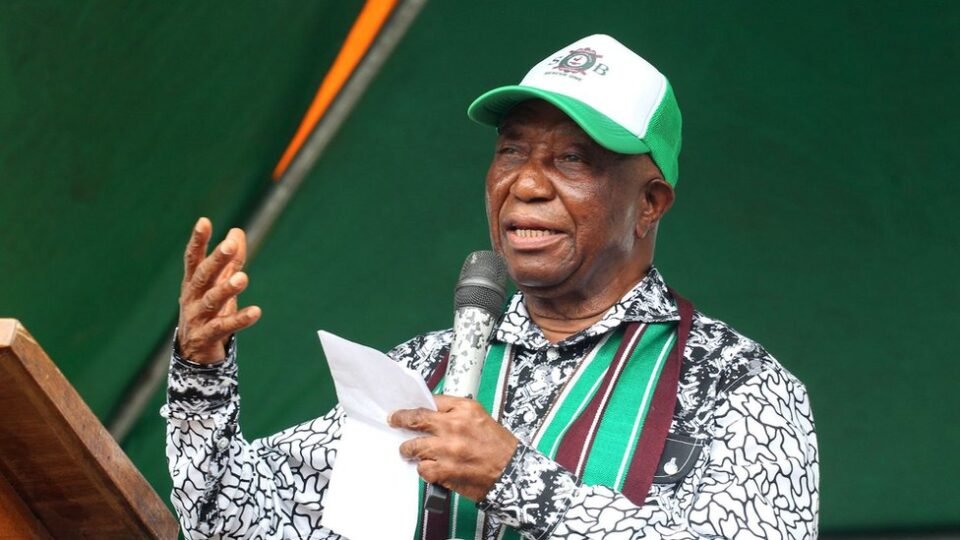
MONROVIA – A latest online survey conducted by the Liberia Excellent News Network (LENN) on Facebook has revealed mixed public opinions on the performance of President Joseph Nyuma Boakai’s administration over the past two years, with a significant number of respondents expressing approval, while others voiced dissatisfaction.
The informal survey asked participants to grade the government’s performance on a scale of one to five, with five representing the highest rating.
Although some respondents exceeded the scale by assigning scores such as 80%, 90%, 100%, or 10/10, the core findings indicate that more than 100 respondents rated the government between 4 and 5, reflecting relative approval of the administration’s performance.
By: Trokon S. Wrepue – trokon1992seokin@gmail.com
Conversely, nearly 70 respondents expressed disapproval, assigning the government low ratings, including scores below three, while a smaller number graded the administration zero, indicating total dissatisfaction.
The survey was conducted four days ahead of President Boakai’s State of the Nation Address, delivered on Monday, January 26, 2026, a timing that appeared to intensify public debate on governance, economic conditions, and service delivery.
Supporters Cite Effort and Progress
Several commenters who rated the government favorably pointed to what they described as steady leadership and ongoing reforms, while cautioning against excessive praise.
Seabrease Kamara wrote: “Joseph N. Boakai is our President. Liberian people don’t love praise too much; when we praise them, they jump into red oil. He is doing his best. I grade him 75%. Before 2029, if he continues his good work, then I will give him the remaining 25%.”
Augustine D. Williams graded the President 70 percent, noting progress but highlighting unresolved challenges:“It was supposed to be 100%, but health workers and teachers are still volunteering. Until more employment is done, I still grade him around seventy percent.”
Others offered outright praise. David K. Yahnquee congratulated the President and prayed for divine guidance, while Aaron Y. Sammie awarded a perfect score, stating: “100/100. The President is doing extremely well for this country.”
Several respondents also rated the administration using the official scale, including Satta F. Sheriff (4/5), F. Sakila Nyumalin (4.5/5), Joe S. Tellewoyan (4.1 percent),
Critics Point to Economic Hardship and Governance Gaps
On the opposing side, critics of the administration cited harsh economic conditions, weak infrastructure, a struggling judiciary, and perceived favoritism in public sector employment as reasons for their low ratings.
Lah Fester graded the government 25 percent, arguing that qualified professionals, including teachers and other licensed workers, remain unpaid volunteers while only a few individuals benefit from government employment.
Emmanuel P. Ghelah expressed outright disapproval, stating: “I grade him zero… nothing he is doing.”
Cyrus Nersahm rated the government 2/5, while Solomon W. G. Hudgekins assigned 2 percent, explaining that higher grades might reduce pressure on the government to meet its targets. Daniel D. Toe compared the current administration with previous leadership, suggesting that past governments also performed poorly.
Jobs Claim Remains Contentious
The survey also reignited debate around the government’s claim of having created over 70,000 jobs, a figure recently released by the Ministry of Information with a statistical breakdown.
While supporters view the claim as evidence of progress, some opposition figures and critics have dismissed it, arguing that many of the jobs are temporary or project-based and do not reflect sustainable employment.
Engagement and Public Discourse
According to LENN, the survey generated 342 reactions, six shares, and 234 comments, underscoring strong public engagement and interest in national governance issues.
While the Facebook survey is not a scientific poll, it offers insight into the diverse opinions shaping online public discourse, revealing a nation divided between cautious optimism and deep frustration, with many agreeing that although some progress may be underway, more decisive action is urgently needed.
