


By: Trokon Wrepue – trokon1992seokin@gmail.com
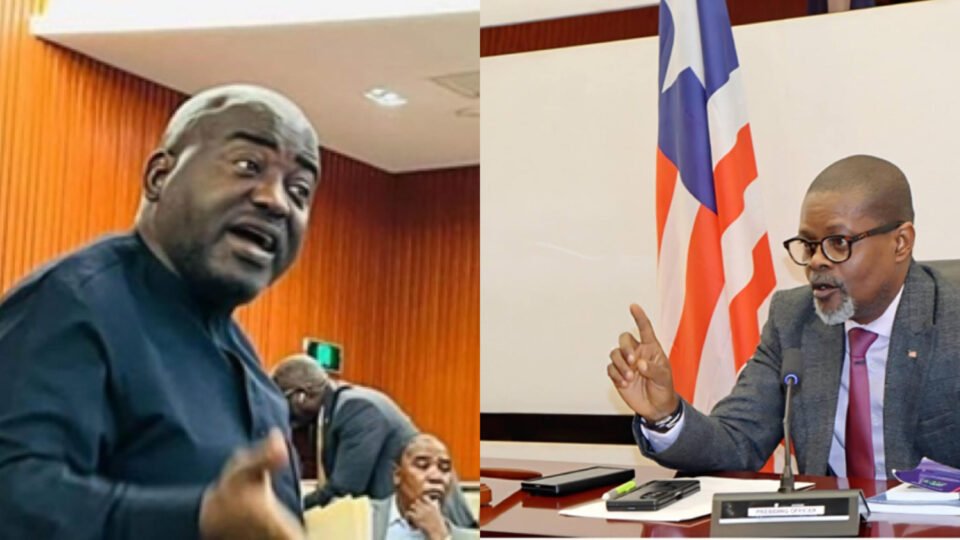
MONROVIA – A fierce constitutional showdown has erupted between Nimba County District #7 Representative Musa Hassan Bility and Montserrado County Senator Abraham Darius Dillon over the ongoing US$1.2 billion National Budget hearings, with both lawmakers trading sharp legal interpretations and political blows.
In a formal communication to the House Speaker, Rep. Bility demanded that the Senate “halt its ongoing budget hearings,” describing the action as a grave constitutional misstep.
The Nimba County lawmaker cited Article 34(d)(i) of the 1986 Constitution, arguing that all revenue and appropriation bills must originate from the House of Representatives. He said the Senate’s decision to hold its own hearings was “inconsistent with long-standing constitutional doctrine.”
According to Rep. Bility, the Senate has no authority to conduct any budget scrutiny before the House acts.
“No budget can be properly before the Senate for concurrence or non-concurrence until it has first been originated and passed upon by the House,” he asserted.
In a blistering public rebuke, Senator Dillon dismissed Bility’s interpretation as both erroneous and politically motivated.
“Your argument… is not simply legally lazy, it is also intended for you to be in the news as usual—but for the wrong reason,” Dillon said.
The Montserrado lawmaker emphasized that while budget origination lies with the House, the Senate possesses full concurrence authority, including the ability to introduce amendments before final passage.
He stressed that nothing in the Constitution bars the Senate from holding its own hearings before the House acts, so long as the Senate does not vote ahead of the House.
“Because the passage ‘originates’ in the House does not preclude or prohibit the Senate from holding hearings before the House acts. No!” Dillon wrote. “What the Senate is prohibited from doing is voting to pass the budget ahead of the House.”
Senator Dillon further argued that early Senate hearings enhance efficiency, ensuring the body is prepared to concur or amend once the House completes its version. “This is being elderly, wise, and proactive!” he added.
With both chambers now entrenched in competing constitutional readings, the controversy has heightened tensions around one of the most consequential national budgets in recent years—raising questions about legislative procedure, political power, and the fragile balance between Liberia’s two legislative houses.
Whether the leadership of both bodies will move toward cooperation or further confrontation remains to be seen.
