


By: Trokon Wrepue – trokon1992seokin@gmail.com
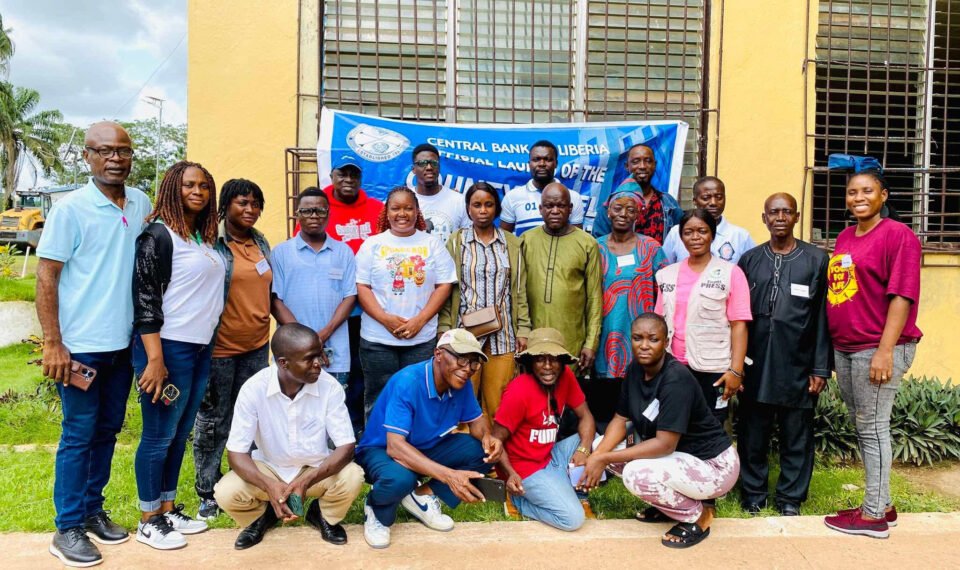
GRAND GEDEH – Fifteen (15) stakeholders from key sectors across Grand Gedeh County have started a two-day Training of Trainers (ToT) workshop in Zwedru. The workshop aims to prepare these individuals to lead Liberia’s financial education and outreach efforts throughout the county’s districts and communities.
Participants represent a diverse group, including women’s groups, youth networks, village savings associations, the disabled community, motorcycle unions, the media, and other grassroots organizations.
They are taking part in this capacity-building initiative to learn how to simplify and deliver essential financial messages to ordinary citizens in practical and accessible ways.
The ToT is designed to build the skills of selected community-based actors who will, in turn, roll out community engagement activities. This effort is part of a larger national campaign to improve financial awareness and inclusion across Liberia.
This workshop is a component of the Central Bank of Liberia’s (CBL) Financial Education Campaign, implemented by the Female Journalists Association of Liberia (FeJAL) in partnership with PERT Consultancy Inc.
The broader goal of the program is to equip underserved Liberians with the knowledge to manage their money wisely, avoid exploitation, and make informed financial choices that improve their livelihoods.
At the opening ceremony, Henry C. Zonweay, representing the Office of the Superintendent, welcomed the participants and thanked the Central Bank of Liberia for initiating the program. “We want to thank the Central Bank for bringing this initiative to Grand Gedeh,” he said. “We believe this training will open new doors of understanding for our people.”
Cultural Ambassador Kekura Kamara highlighted the importance of traditional communication methods in delivering financial education messages. “Our role is to mobilize people using traditional methods—drama, dancing, storytelling,” he said.
He also stressed the need to use local languages and cultural tools to effectively connect with communities. “It’s not just about what you say, but how and to whom you say it. If you speak the people’s language and use what they understand, the message will stick.”
Cllr. Alphonsus Zeon, Chair of the Financial Education Working Group, provided an overview of the campaign, describing it as part of a wider effort to promote financial stability at both the household and national levels. “If our people know how to set financial goals, pay debts, save, and invest, they reduce stress and gain control over their future,” he said. He explained that the national program is rooted in Liberia’s fiscal reforms and aims to decentralize financial knowledge.
Lisa Tenneh Diasay, President of FeJAL, outlined the workshop’s objectives, emphasizing that the goal is not just to share financial knowledge but to equip participants with tools to inspire real behavior change.
The core themes include household budgeting, saving, borrowing responsibly, setting financial goals, understanding mobile money and banking services, and knowing one’s rights as a financial consumer. “These topics are critical for helping individuals make informed choices, avoid debt traps, and create a path toward economic stability,” she stressed.
Participants expressed hope that the training would improve their own financial decision-making and enable them to become advocates in their communities. They pledged to reach rural areas with consistent messaging to ensure sustainability.
Day One featured an interactive discussion on household budgeting, which participants identified as both important and personally challenging.
One participant humorously asked, “What’s the medication for the temptation not to budget?”—a comment that sparked laughter and deeper reflection on common financial struggles.
Participants also completed a pre-training evaluation to assess their baseline knowledge, helping facilitators track their learning progress throughout the workshop.
The training will culminate in sessions on outreach planning, message delivery strategies, and simple monitoring tools to measure community impact.
As part of the campaign activities, a National County Launch will be held on Monday, June 23, at Zwedru City Hall. The event aims to engage broader community input on the importance of managing money properly, saving, budgeting, and more.
FeJAL’s involvement in this Financial Education and Literacy Program underscores the vital role of inclusive communication in closing Liberia’s financial literacy gap. This initiative supports the CBL’s broader financial inclusion strategy, which targets rural and vulnerable populations often excluded from formal financial systems.
