


NATIONAL NEWS
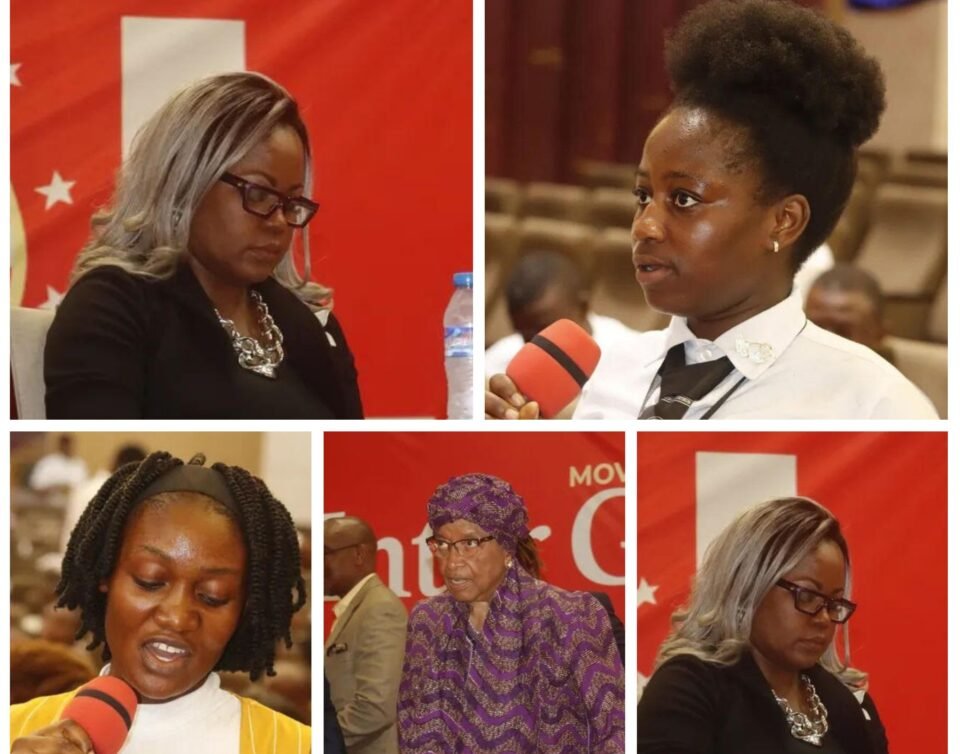
MONROVIA – A rare and powerful convergence of Liberia’s political past and its emerging future unfolded at the Ellen Johnson Sirleaf Ministerial Complex, where seasoned statespersons and outspoken young leaders gathered for an Intergenerational Dialogue that many are already describing as one of the most consequential civic engagements in recent times.
By: Trokon A. Freeman/+231777973957
Hosted by the Movement for One Liberia (MOL), a political party headed by MacDella Cooper, Senior Political Advisor to President Joseph Nyumah Boakai, the event was designed to do more than facilitate discussion. It aimed to bridge a widening generational divide and confront the realities shaping Liberia’s governance and development.
What began as a formal gathering quickly transformed into a powerful and ultimately necessary national conversation.
Former President Sirleaf Sets the tone with experience and challenge
The highlight of the dialogue came with the appearance of former President Ellen Johnson Sirleaf, whose presence alone commanded attention.
In a compelling fireside chat, Sirleaf delivered a message grounded in experience but directed firmly at the future. She urged young Liberians to move beyond critique and position themselves for leadership, emphasizing that governance requires discipline, sacrifice, and preparedness.
Drawing from her tenure leading Liberia through post-war recovery, she stressed national unity and responsible leadership as non-negotiable pillars for progress. Her remarks struck a balance between encouragement and challenge, acknowledging the frustrations of youth while insisting on their readiness to take responsibility.
Heavyweight lineup, hard conversations
Beyond Sirleaf’s appearance, the dialogue featured a cross-section of influential Liberian figures who engaged in frank discussions on the state of the nation. The lineup of national figures, include:
1. Dr. Augustine Konneh, Senior Advisor to President Boakai
2. Cllr. Gloria Musu Scott, former Chief Justice
3. Olubanke King Akerele, former Foreign Affairs Minister
4. Prof. Wilson Tarpeh, former Commerce Minister
5. Dr. Clarence Moniba, former presidential candidate
6. Amb. Conmany B. Wesseh, former Senator of River Gee
7. Prof. Alaric Tokpa, Chairman of the Governance Commission
8. Madam Lucia Massalee Yallah and
9. Sister Mary Laurence Browne
Together, they tackled pressing national issues, from governance and accountability to youth inclusion and policy direction.
Panel discussions reportedly pushed beyond surface-level politics, with participants challenging each other on corruption, leadership gaps, and the urgency of reform.
Key issues such as governance inefficiencies, corruption, economic stagnation, and the slow pace of development dominated panel sessions. Rather than rehearsed talking points, participants engaged in direct exchanges that revealed underlying tensions between Liberia’s established leadership and its younger generation.
Senior figures often called for patience, institutional respect, and gradual reform. In contrast, youth participants pushed back, arguing that the urgency of Liberia’s challenges demands faster, more inclusive action.
Youth voices shift the narrative
In a significant departure from traditional forums, young people were not sidelined. They were central.
Armed with lived experiences and growing frustration, youth participants raised critical concerns about unemployment, limited political participation, and what they described as a persistent disconnect between policymakers and ordinary citizens.
Their interventions were bold and unapologetic. They challenged leaders to move beyond symbolic inclusion and create real opportunities for participation in governance and decision-making.
For many observers, this marked a turning point: a space where young Liberians were not just present, but influential.
MacDella Cooper’s vision of “One Liberia”
At the heart of the event was the vision of MacDella Cooper, whose Movement for One Liberia seeks to foster unity across generational, political, and social lines.
In her remarks, Cooper emphasized that Liberia’s progress depends on collaboration, not competition, between generations. She called for a more inclusive national framework where women, youth, and marginalized communities are fully integrated into leadership and policy processes.
Her message resonated throughout the event: Liberia cannot move forward divided by age, experience, or opportunity.
Dialogue or Defining Moment?
As the discussions drew to a close, a critical question lingered: will the dialogue lead to tangible change?
While participants widely praised the openness and depth of the conversations, skepticism remain about whether the energy generated will translate into concrete policy shifts or sustained engagement.
Observers note that Liberia has seen similar dialogues in the past, often with limited follow-through. This places added pressure on organizers, participants, and policymakers to ensure that this moment does not fade into symbolism.
A nation in conversation
Despite uncertainties, the significance of the event is difficult to dismiss. For several hours, Liberia’s past and future occupied the same space, not in opposition, but in dialogue. There were disagreements, moments of tension, and differing perspectives, but also a shared recognition of the country’s challenges and the need for collective action.
Whether this Intergenerational Dialogue becomes a catalyst for change or remains a notable moment in Liberia’s civil discourse will depend on what follows.
For now, one thing is certain: the conversation has begun, and it is gaining momentum.
“The Dialogue is a structured exchange between young political enthusiasts and senior political legends of our time, aimed at addressing national political issues, bridging ideological divides, and fostering long-term social cohesion”, Madam Cooper.
The event seeks to transcend casual conversations by creating an intentional space where participants from different generations and political persuasions can engage on an equal footing, sharing perspectives on governance, rights, and public policy”, Madam Macdella Cooper.
Intergenerational dialogue is widely recognized as a powerful tool for national development. It unites youth and older generations to exchange ideas, dismantle stereotypes, and co-create sustainable solutions to societal challenges. In the Liberian context, such dialogue is particularly vital.
